DST fundamentals
What is a Delaware statutory trust?
Understand DST ownership, potential 1031 exchange eligibility and the practical trade-offs of passive real estate investing.
Read guide →
Home / Learning center / Risks and due diligence
Risks and due diligence
Winthco Wealth Management · Updated October 2, 2026
DST fees can include offering and acquisition costs, compensation to selling firms, property management expenses, financing charges and disposition-related payments. The specific offering documents control. Compare the complete cost structure, who receives each payment, when it is charged and how it affects cash flow and potential sale proceeds.
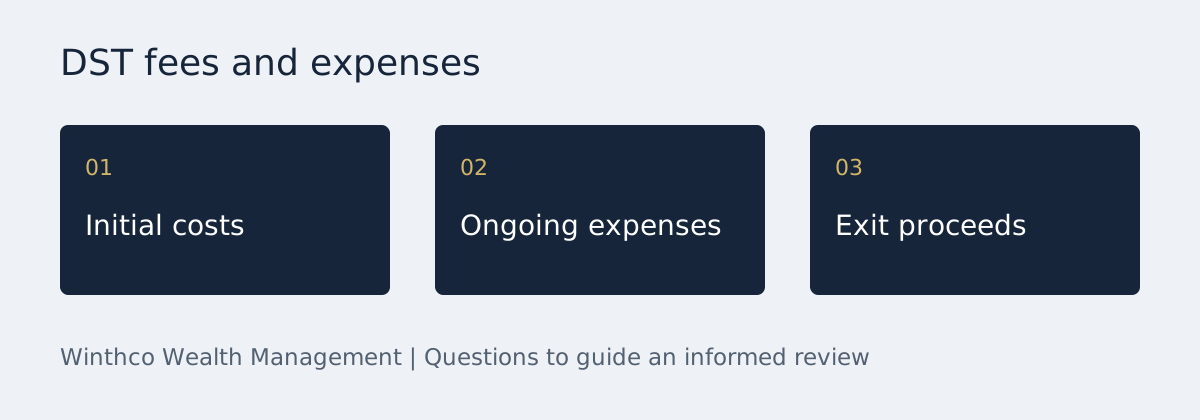

A quoted upfront percentage rarely answers every cost question. An investment can have an initial cost to organize or distribute the offering, recurring compensation to service providers, ordinary property operating expenses and costs paid when the property is sold. Those categories affect different parts of the investor's experience. A meaningful comparison keeps them separate before adding them into a broader economic review.
Start by asking what the quoted number includes and excludes. Is it compensation to a selling firm, a total offering expense, a property acquisition cost or something else? What denominator is being used: your invested equity, the property's purchase price or another amount? Two percentages with different denominators cannot be compared as though they describe the same charge. Request the relevant document section rather than relying on an informal explanation.
Share your timeline and investment range. A Winthco team member will follow up with you.
Offering documents may describe organizational expenses, selling compensation, due-diligence costs, acquisition-related compensation and financing expenses. Names and structures vary. Some amounts may be reflected in the total capitalization of the investment rather than separately invoiced to you. That does not make them irrelevant to the capital available for the investment.
Ask for a sources-and-uses explanation showing how investor equity and borrowed money are allocated. Separate the property purchase from reserves, financing and offering costs. Avoid assuming that every dollar subscribed buys an equivalent dollar of independently appraised property value. Read how the purchase price was established, whether affiliates are involved and what information supports the valuation. The purpose is to understand the economics, not to assume that one cost label establishes fairness or unfairness.

A property can incur management, insurance, maintenance, taxes, utilities and other operating expenses. The investment structure may also pay asset-management or administrative compensation. These are not all interchangeable. Property expenses keep the real estate operating; other payments compensate parties overseeing the investment or performing contracted services.
For each recurring charge, identify the calculation method and payment recipient. Is the amount fixed, based on revenue, related to asset value or determined another way? Does compensation continue when distributions are reduced? Are there minimum charges, reimbursements or affiliate arrangements? A claim that the adviser receives no ongoing fee does not mean the property or trust has no ongoing expenses. Request a clear explanation of both the adviser relationship and the offering's operating economics.
Discuss your DST questions with Winthco →
Financing can introduce interest, lender charges and other costs under the loan documents. Debt terms may also constrain the property's flexibility. Review maturity, rate provisions, covenants and any transaction costs that become relevant if a property is sold or financing changes. The exact trust structure and permitted actions matter; do not assume refinancing will be available as a simple solution.
At disposition, brokerage expenses, closing costs, outstanding debt and sponsor compensation can affect the cash left for investors. Ask for an explanation of the order in which sale proceeds would be distributed. A projected gross sale price is not a projected net payment to you. Compare the offering's base assumptions with a lower-value or delayed-sale scenario, and understand which fees still apply under those less favorable conditions.

Build a worksheet with the same rows for both offerings: investor equity, initial costs, reserves, recurring compensation, property expenses, financing assumptions and exit-related charges. Record each amount's basis and source. If an item is undisclosed, mark it as an unanswered question rather than filling the gap with zero. Ask an authorized representative to reconcile differences in how the documents present the figures.
For a hypothetical illustration, imagine two proposals showing the same annual cash distribution. One may rely on different leverage, reserve use or occupancy assumptions. Their matching distributions do not establish equivalent returns or risk. You would still need to examine the original capital invested, all costs, timing, property value and eventual net proceeds. This example is a comparison method, not an estimate of any current offering's results.
A consistent fee worksheet complements the broader process of evaluating a DST, including the property and financing review.
WATCH & LEARN
“1031 DST Welcome Video From Winthco Wealth Management” by Winthco Wealth Management. A 42-second introduction to the team’s DST resources. Original resource · Watch on YouTube ↗
Educational context only. The discussion does not establish the suitability, returns or tax treatment of an investment.
No. Cost matters, but it is one component of the decision. A lower-cost investment may still have concentrated tenants, an unfavorable debt maturity, limited reserves or a strategy that conflicts with your liquidity needs. A more expensive offering is not automatically better, either. Ask what service or economic benefit each charge is intended to support and whether you can assess that explanation from the available evidence.
Avoid starting with a desired distribution rate and treating every other question as secondary. Consider how much cash you need outside the investment, the time horizon you can accept and the consequences of a loss. Accreditation, a completed exchange and a familiar sponsor do not eliminate those questions. Your household plan and the actual offering documents should remain central to the review.
Ask how the adviser and firm are compensated, which parties pay them and whether compensation varies among alternatives. Ask whether any proposed discount or credit is permitted, documented and reflected in the actual transaction documents. Do not assume an advertised fee or a prior client's arrangement applies to your transaction. The authorized firm's procedures and the specific offering terms govern.
Keep the responses with the offering memorandum, supplements and your notes. Record the version and date of each document so you can identify later changes. If a verbal statement conflicts with the written materials, resolve it before proceeding. Winthco's prospect contact form can organize your goals and timeline, but it does not replace the fee disclosures, establish a negotiated arrangement or approve an investment.
Use these written questions when speaking with a Delaware statutory trust advisor about their role and compensation.
A useful finished worksheet distinguishes facts from assumptions. For a disclosed charge, record the document page, calculation basis, recipient and payment timing. For an estimate, record the assumption and who supplied it. For a missing answer, assign a follow-up question rather than treating the amount as negligible.
Review the worksheet again if a supplement changes the offering or financing terms. Ask whether the revised information changes projected cash flow, reserves or net sale proceeds. Keep the earlier version so that you can explain what changed. This small documentation step helps prevent a comparison based on an outdated summary from carrying through to a final decision.
| Decision | Evidence to request | What to avoid assuming |
|---|---|---|
| Initial costs | Offering memorandum and sources-and-uses schedule | The headline percentage includes every charge |
| Ongoing costs | Management agreements and expense assumptions | No adviser fee means no property expenses |
| Exit costs | Disposition terms and proceeds waterfall | Gross sale value equals investor proceeds |
No. Costs depend on the offering, distribution arrangements, services and transaction documents.
No. The property and trust can still incur operating, administrative and other charges.
Yes. Initial costs are part of the economics and can influence how much appreciation or cash flow would be needed to offset them.
No. Examine its source, assumptions, fees and principal risk alongside potential net sale proceeds.
No discount or credit is established by this article. Any arrangement must be permitted and confirmed through the appropriate firm and offering documents.
Sources checked October 2, 2026. This article explains general concepts; your facts and the applicable documents control.
Winthco DST services · Winthco evaluation overview · Editorial standards
DST fundamentals
Understand DST ownership, potential 1031 exchange eligibility and the practical trade-offs of passive real estate investing.
Read guide →1031 exchange planning
Plan the identification and completion periods for a deferred 1031 exchange, including the earlier tax-return deadline.
Read guide →Risks and due diligence
Review DST liquidity, leverage, sponsor conflicts, fees and distribution assumptions before making an investment decision.
Read guide →Share your timeline and investment range. A Winthco team member will follow up with you.