1031 exchange planning
1031 exchange deadlines: the 45-day and 180-day rules
Plan the identification and completion periods for a deferred 1031 exchange, including the earlier tax-return deadline.
Read guide →
Home / Learning center / Exchange Planning
Exchange Planning
Winthco Wealth Management · Updated November 16, 2026
You can transfer multiple investment properties as part of one deferred 1031 exchange, but staggered closings create a shared timing risk. The earliest transfer starts the identification and exchange periods. Plan ownership, available funds and replacement purchases with your CPA, attorney and qualified intermediary before the first sale, including any proposed DST allocation.
Selling several rentals can simplify a landlord's workload, but the sale plan should not begin with a replacement brochure. Interview a licensed realtor or broker about each property's likely buyer, valuation, marketing period, compensation and closing contingencies. Ask for separate net sheets and a combined schedule. A strong offer on one property does not mean the other properties will close on time or produce the expected cash.
Bring the sale contracts, ownership records, loan balances and estimated costs to your CPA, attorney and qualified intermediary before the first transfer. Identify which properties are intended for the same exchange and which may be separate transactions. Do not casually combine personally owned property, an entity's property and a co-owner's share. Your advisers need to determine who the taxpayer is and how the proposed replacement will be acquired. A QI coordinates exchange mechanics; an investment adviser evaluates investment fit, and tax and legal professionals resolve ownership and tax questions.
Share your timeline and investment range. A Winthco team member will follow up with you.
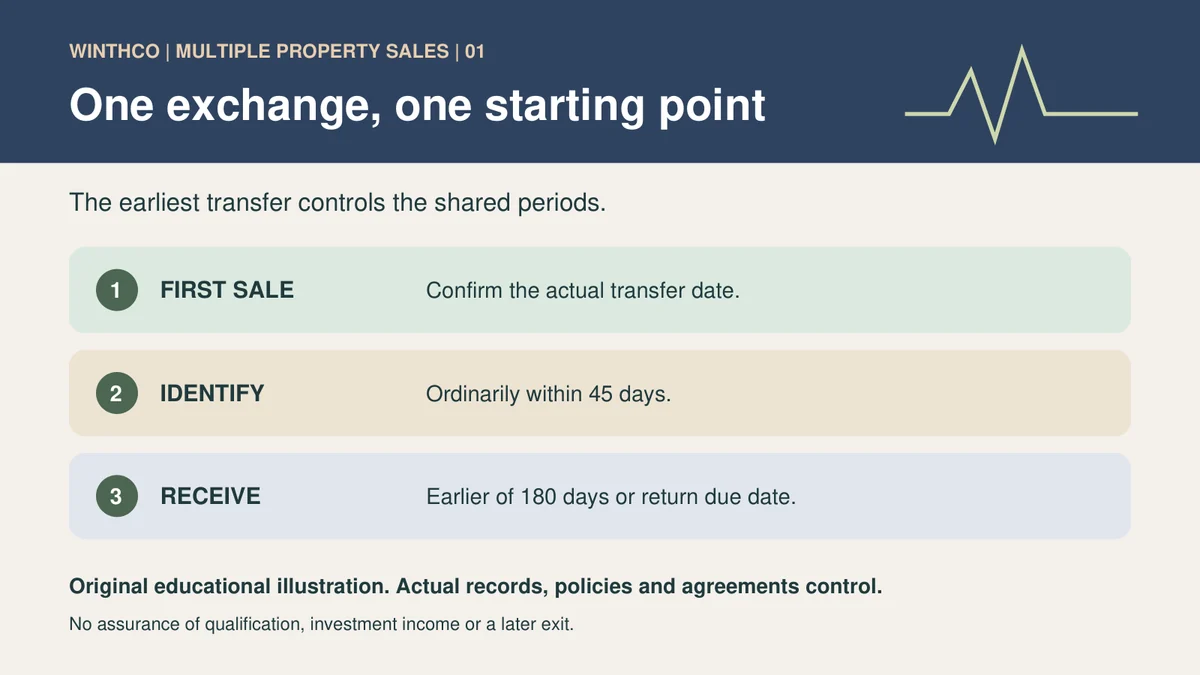
IRS Publication 544 states that when multiple properties in the same transaction transfer on different dates, the identification and exchange periods begin with the earliest transfer. The ordinary identification period is 45 days; replacement receipt is due by the earlier of 180 days or the federal return due date, including extensions. Do not restart the calendar when the last property sells. Our 1031 deadline guide explains the basic timing framework.
Hypothetical: Rental A transfers on day zero, while Rental B is expected to transfer on day 30 as part of the same deferred exchange. The owner still needs a timely identification measured from Rental A, not an additional 45 days after Rental B. If B's buyer requests more time, the team must reconsider available funding and the replacement plan. That delay does not itself change the exchange deadline. Have the QI confirm the actual calendar dates and the effect of a return extension, rather than relying on an informal day count.
Identification and funding are separate tasks. Your QI should review the signed written identification, its delivery and the description of each proposed replacement. Selling more properties does not automatically multiply the number of replacement properties you may identify under the three-property rule. The alternatives have valuation and receipt requirements. Ask the QI to test the entire proposed list, including DST interests, instead of assuming every line in a sponsor's summary counts the way you expect.
Build the list around realistic purchase amounts and documented alternatives. Winthco's introduction to DST replacement interests explains the basic structure, but a potential offering is not a reservation. Ask how an interest would be described, whether the allocation remains available, what documents are needed and who confirms acceptance. Reconcile those details with the QI before relying on an identification. A sales presentation, an unsigned subscription package and a completed acquisition represent different stages.
Discuss your DST questions with Winthco →
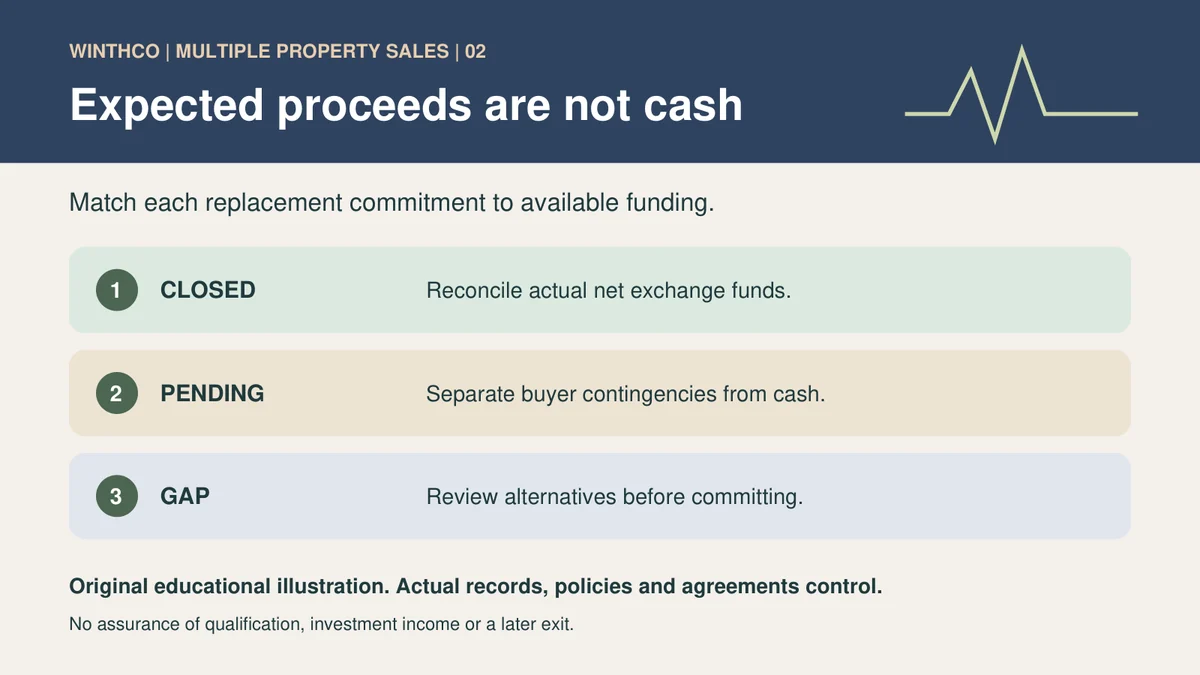
Start with a funding calendar, not just total equity. List the money already held for the exchange, expected net proceeds from each pending sale, any permitted additional cash and the amount due for each replacement closing. Ask the closing team when funds must be received and cleared. Do not move exchange funds through a personal account to make coordination easier. Review disbursement restrictions and instructions with the QI, and verify any wire instructions through an independently established contact method.
If a replacement depends on Rental B closing first, identify that dependency before making commitments. Ask what happens if B fails inspection, a buyer's financing changes or proceeds are lower than projected. Possible responses may include adjusting an allocation before commitment, considering another properly identified replacement, adding outside funds if appropriate, or accepting a taxable outcome. Availability, documents and tax treatment determine what is possible. Borrowing or stretching household cash merely to preserve a hoped-for deferral can introduce a different problem.
Keep separate tax records even when funds support a combined plan. Have the CPA reconcile basis, depreciation, debt relief, acquisition debt, additional cash and settlement charges. Net cash from escrow is not the same as taxable gain or the amount of replacement value required for a particular tax result. Do not assume a fee is exchange-qualified because it appeared on a closing statement. Cash or other non-like-kind consideration can produce recognized gain, and deferral does not erase the underlying tax history.
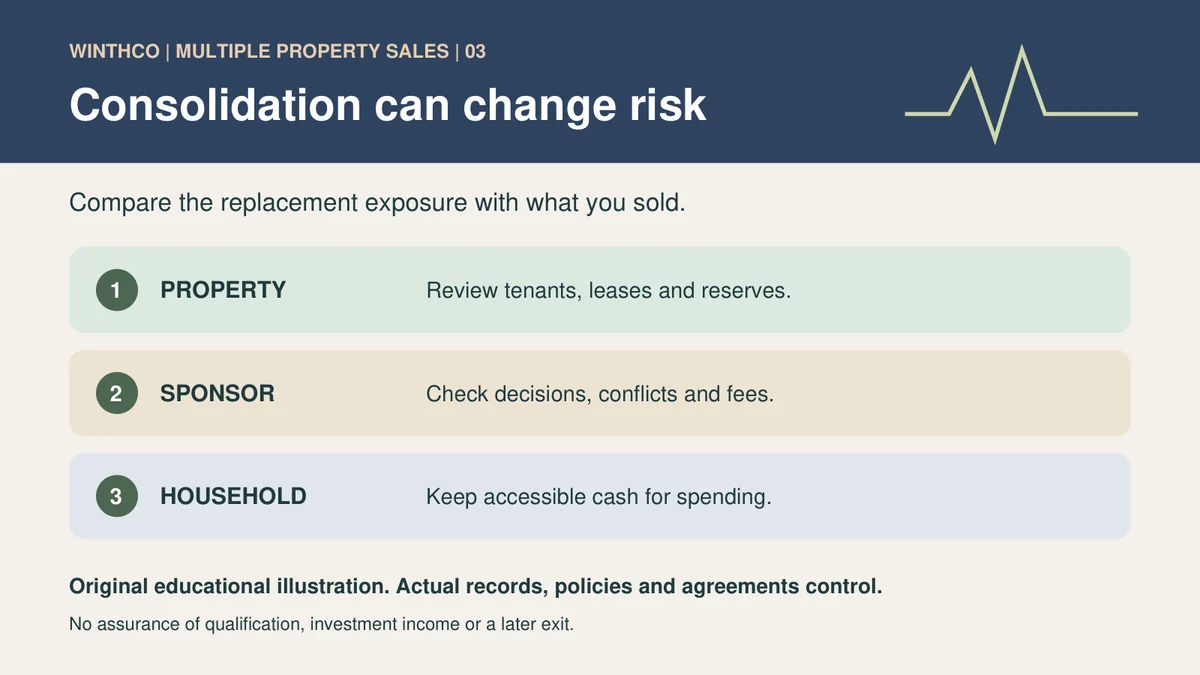
A qualifying DST interest may provide a way to replace direct landlord duties with a beneficial interest in real estate. Revenue Ruling 2004-86 addresses a specific trust structure; it does not make every trust or purchase eligible for Section 1031. Confirm the offering's structure and your exchange facts separately. Consolidating sale proceeds into a DST can reduce operational work while leaving the investor with limited control over leasing, financing, reserves and the eventual sale.
Use Winthco's DST due-diligence document overview to prepare questions, then read the actual private placement memorandum and supporting documents. Compare acquisition charges, selling compensation, ongoing expenses and exit fees. Ask who receives each payment, including affiliates. Review tenant concentration, lease expirations, property condition and funded reserves. Find out whether a reserve is restricted by a lender. A deadline does not make an unsupported assumption about rent growth or resale value more reliable.
Match the proposed allocation to a downside case. If two rentals previously served different tenants, moving both sets of proceeds into one property could increase concentration. Several DST interests can also share the same sponsor, market or property type. Examine debt maturity, interest-rate exposure and the cash needed if income weakens. Private placements can be illiquid and provide less public information than registered offerings. DST offerings are generally limited to accredited investors and made through a private placement memorandum. Distributions can decline or stop, and investors can lose principal.
Ask the recommending professional what investigation supports the recommendation and how compensation differs across alternatives. FINRA's private-placement guidance is relevant to that discussion. Closing availability is only one consideration alongside risk, fees and household suitability. If the only reason for choosing an offering is that another sale has slipped, pause the investment decision long enough to compare the consequences of not making that purchase. A taxable sale is not automatically preferable, but neither is an unsuitable replacement.
WATCH & LEARN
Jeff Peterson of CPEC1031 discusses multi-sale logistics and ownership issues. Third-party education, not a Winthco affiliation. The federal return due date can shorten the ordinary 180-day period; your advisers must review your facts. Original resource · Watch on YouTube ↗
Educational context only. The discussion does not establish the suitability, returns or tax treatment of an investment.
No. A potential Section 721 contribution to a partnership is separate from the initial 1031 exchange and may never be offered or completed. A later UPREIT arrangement can involve operating partnership interests, but ordinary REIT shares and partnership units are not direct Section 1031 replacement real estate. Ask who can initiate and approve a proposed transaction, which fees or conflicts apply and what happens if the trust remains in place instead.
Do not use a possible future redemption as the source of money for present obligations. Read the actual transfer and redemption conditions before assigning liquidity to a future interest. The tax consequences require individual review. Consolidating several properties might meet a goal of reducing management work, but that goal does not establish that every subsequent exchange, contribution or investment change will be appropriate.
Discuss essential spending, taxes, emergency reserves and foreseeable family costs before committing all available equity. Model a period without distributions and a holding period longer than expected. Review existing taxable investments, 401(k)s and IRAs separately; retirement accounts are not exchange proceeds. Compare costs, services and access rules before considering any rollover or transfer, and coordinate beneficiary and estate decisions with your attorney.
A useful first conversation with Winthco can begin with the number of properties, general closing windows and what you want to change about your workload or retirement income. Use the prospect contact form on this article or the dedicated contact page. Keep account numbers, tax returns and tenant records out of the initial inquiry. The objective is a coordinated sale and investment decision, not simply moving the largest possible amount before a deadline.
| Decision | Evidence to request | What to avoid assuming |
|---|---|---|
| First property transfers | QI confirms shared dates | Later sales restart the clock |
| Second sale pending | Net proceeds and contingencies | Expected money is available now |
| DST allocation | Documents, acceptance and suitability | Identification reserves an offering |
| Household planning | Cash independent of distributions | A future exit funds current bills |
They can, when the structure and facts support it. Have the CPA and QI review ownership and the entire transaction before the first closing.
Not for properties in the same deferred exchange. The earliest transfer controls the shared periods.
No. Ask your advisers to establish and document the intended structure before closing. Separate paperwork labels alone are not a tax opinion.
No. Confirm availability, subscription requirements and acceptance separately with the offering parties and your advisers.
No. Distributions may change or stop and principal can be lost. Keep an independent liquidity plan.
Sources checked November 16, 2026. This article explains general concepts; your facts and the applicable documents control.
Winthco DST services · Winthco evaluation overview · Editorial standards
1031 exchange planning
Plan the identification and completion periods for a deferred 1031 exchange, including the earlier tax-return deadline.
Read guide →1031 exchange planning
Learn how multiple DSTs affect identification, closings, allocation and concentration risk in a 1031 exchange.
Read guide →1031 ownership planning
Learn how co-owners and LLC members evaluate separate 1031 exchange paths, DST replacements, ownership rules, deadlines and risks.
Read guide →Explore Winthco’s main DST article collection
Share your timeline and investment range. A Winthco team member will follow up with you.