DST due diligence
DST Reserves and Capital Repairs: What to Review
Before exchanging a rental into a DST, review repair budgets, restricted reserves and funding limits. Know which questions to ask before committing.
Read guide →
Home / Learning center / Local Guides
Local Guides
Winthco Wealth Management · Updated November 13, 2026
Before selling an Ojai rental, verify its parcel-level fire hazard designation and ask your broker and escrow team which defensible-space records apply. If you are considering a 1031 exchange, involve a qualified intermediary before closing. Evaluate a Delaware statutory trust separately: giving up direct management does not remove insurance, financing or property risk.
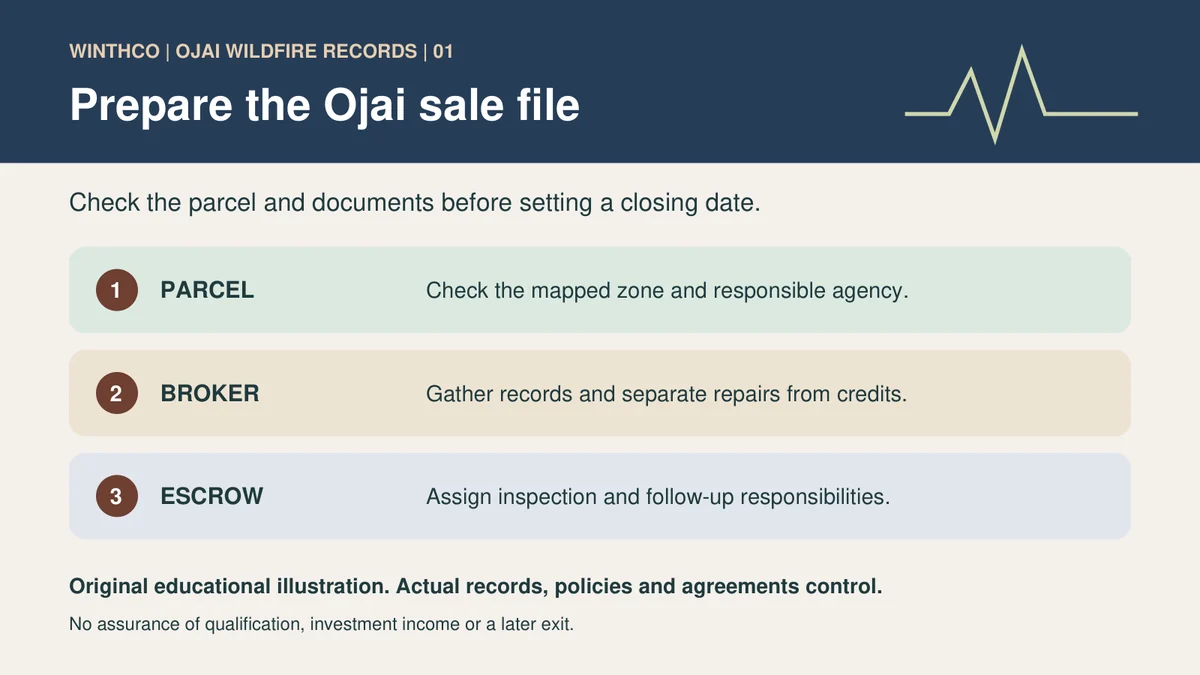
Interview an appropriately licensed broker who has sold occupied rentals like yours. Ask for comparable closed sales, a plan for showing the property without disrupting tenants, a written explanation of compensation and marketing expenses, and a net proceeds estimate that separates repair work from buyer credits. Share leases, maintenance records, insurance renewal notices and any defensible-space documents early enough for the broker to explain what has been verified and what remains open.
Start with the assessor parcel number, not the mailing address alone. The State Fire Marshal's Ojai map distinguishes the incorporated city from nearby unincorporated areas, and Ventura County Fire lists Ojai in its service area. Check the county's parcel viewer and confirm with the department whether the sale requires an inspection and which documents escrow needs. Ask who will schedule any follow-up and how a delay would change the closing date. An inspection record is not an insurance quote or an appraisal.
Share your timeline and investment range. A Winthco team member will follow up with you.
Bring in your CPA, attorney and qualified intermediary before the transfer of the rental, not once you have received the proceeds. The broker markets the property and negotiates the sale; the attorney reviews ownership, contracts and legal obligations; the CPA models tax outcomes; the intermediary documents and facilitates the exchange. A DST or financial advisor can explain investment choices and conflicts but does not replace those professionals.
Section 1031 can defer eligible gain on an exchange of qualifying real property held for investment or productive use in a trade or business. In a typical deferred exchange, the IRS requires written identification within 45 days of the transfer and receipt by the earlier of 180 days or the federal return due date, including extensions. Cash or other non-like-kind property received can trigger gain recognition. Ask the CPA to model debt relief and credits from the actual settlement statement and check California reporting if the replacement is outside the state. Winthco's overview of DST interests in a 1031 exchange explains why replacement eligibility deserves its own review.
A qualifying beneficial interest can substitute for direct ownership of a replacement property for federal exchange purposes when the facts and trust terms support that treatment. IRS Revenue Ruling 2004-86 analyzes a particular trust; it does not bless every product with DST in the name. The investment may take repair calls and lease negotiations off the investor's calendar, but the people who make those decisions are still spending money that affects the property's value. Ask for the private placement memorandum and trust agreement rather than relying on the sales summary.
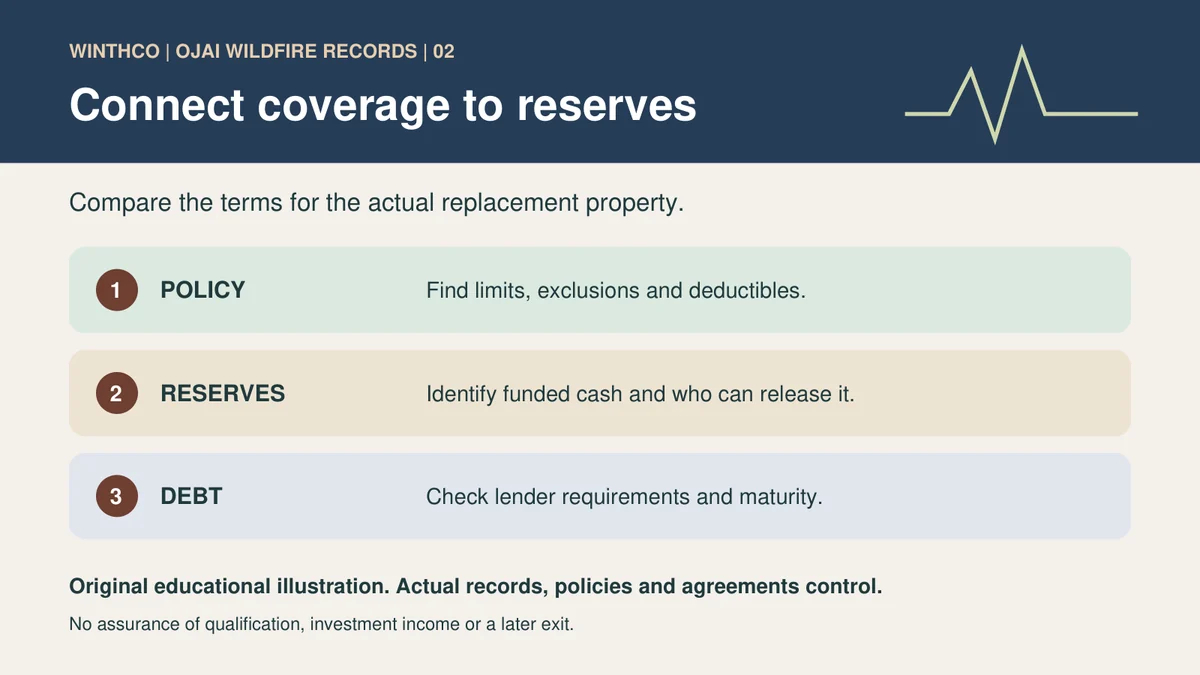
Read insurance in layers. Which policy covers the building, what losses are excluded, what deductible or separate sublimit applies, and whose obligation is it to pay? Does coverage for lost income start after a waiting period or end before a plausible recovery? A certificate can tell you that a policy exists without answering those questions. Request the most recent coverage summary and ask the sponsor how it would address a more expensive renewal, a larger deductible or a loss outside coverage. This applies to wildfire and to other hazards tied to the replacement property's actual location.
Then compare the insurance obligations with reserves and loan terms. Separate cash that is actually funded from future deposits shown in projections. Ask who controls restricted reserves, whether lender approval is needed for release and which expenses take priority before investor distributions. Review loan maturity, lender insurance requirements and the consequences if proceeds do not cover restoration. A high occupancy figure tells you little about the ability to absorb a loss if the insurance claim is delayed or a key tenant stops paying. Use Winthco's guide to evaluating a DST offering to organize the documents and follow up on gaps.
Discuss your DST questions with Winthco →
Request a written breakdown of selling compensation, offering costs, sponsor or affiliate fees and amounts payable on a property sale. Ask which costs reduce the initial capital invested and which are paid over the holding period. Fees and debt can magnify a weak result. A private placement often provides less disclosure than a public offering, and resale restrictions and a thin market can make it difficult to sell. Distributions may decline or stop and investors may lose principal. Many offerings are limited to accredited investors; meeting an eligibility test does not make the investment suitable.
Hypothetical: An Ojai landlord discovers during escrow that the buyer's insurer wants further documentation. Closing moves back. The seller and QI confirm the actual transfer date and keep two separate files: one for buyer and escrow requests, the other for replacement identification and availability. The seller compares a directly owned replacement with a DST that depends on one major tenant and carries a sizable property deductible. Instead of comparing advertised distributions, the seller asks both teams how long each option could cover property expenses without rental income, and what the owner would be asked to do if the money ran short. A taxable sale is also worth modeling if the replacement candidates are a poor fit.
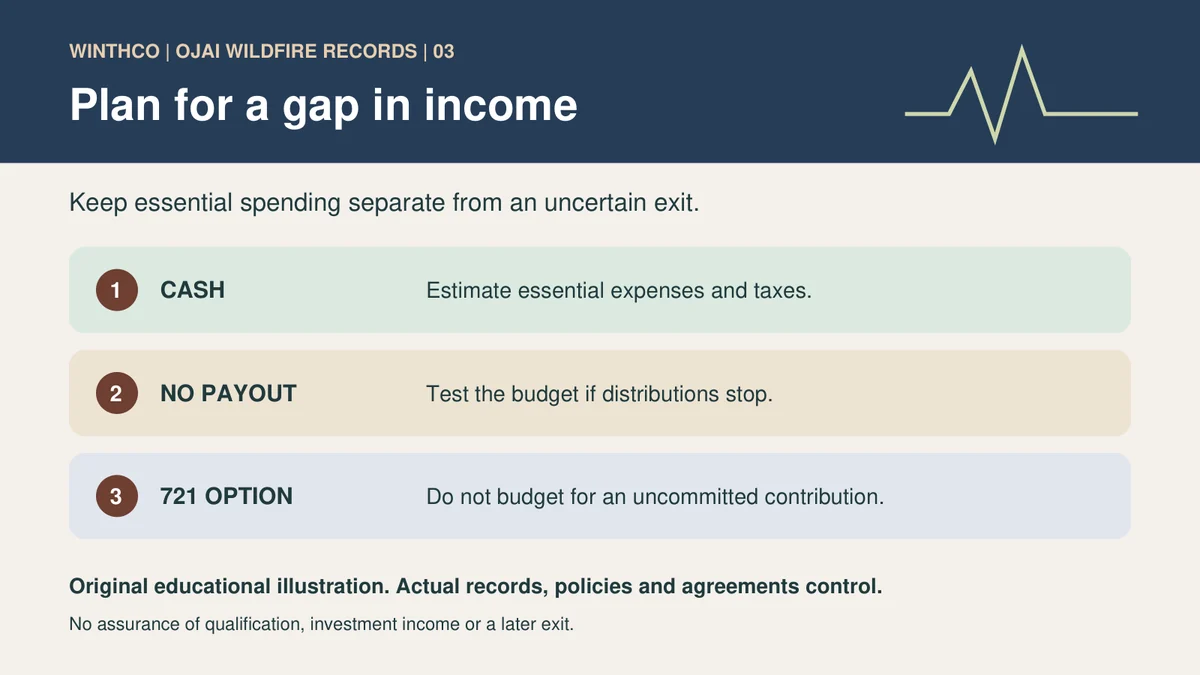
No. A potential Section 721 contribution involves property exchanged for an interest in a partnership. An UPREIT may use operating partnership units as consideration, but a qualifying initial 1031 acquisition and a later contribution are separate transactions. Neither OP units nor ordinary REIT shares are direct replacements for real property in a Section 1031 exchange. Do not assume any operating partnership has agreed to acquire the DST property.
Ask what can trigger an offer, who decides whether to accept it, whether alternatives exist and which investor rights would change. If units are offered, ask when they may be redeemable, whether the holder or the partnership chooses cash versus shares, and which taxes could arise on redemption, sale or debt changes. Have your own tax counsel read the agreements, including what happens if no contribution occurs. A future transaction that no one is obliged to complete should not fund a retirement budget.
WATCH & LEARN
Accruit introduces DST interests as possible 1031 replacement property. This third-party video is general education; review actual coverage, costs and loss risks separately. Original resource · Watch on YouTube ↗
Educational context only. The discussion does not establish the suitability, returns or tax treatment of an investment.
Compare household obligations with assets available on short notice. Budget for essential spending, taxes and family needs even if distributions stop. Consider how an illiquid real estate position changes overall allocation, especially if other assets or income are tied to property. Coordinate beneficiary and estate instructions with your attorney. Review IRAs and 401(k)s separately for services, costs and access rules; they are not exchange proceeds, and a rollover or account transfer should not be presumed.
Bring a short written comparison to the planning meeting: cash available if the sale closes, cash available if escrow takes longer, and the amount that would still be accessible after each possible replacement. List the next major expenses and their dates, rather than treating a broad retirement income estimate as a cash budget. That comparison can show when retaining more liquidity matters more than reducing the immediate tax bill. A conversation with Winthco can start with the closing timeline and liquidity needs. Use the prospect form here or the dedicated contact page without entering sensitive tax records.
City-area context only. This is not a parcel or hazard map and does not show a Winthco office.
| Decision | Evidence to request | What to avoid assuming |
|---|---|---|
| Ojai sale file | Parcel designation, inspection applicability and escrow documentation | A mailing address alone proves applicability |
| Direct replacement | Control of insurance, reserves and repair decisions | More control means less financial exposure |
| DST replacement | Offering terms, net fees, debt, insurance and funded reserves | Passive management removes property risk |
| Potential 721 | Actual partnership agreement and redemption limits | An optional transaction gives cash on demand |
Do not assume that. Confirm the specific parcel, responsible agency and applicable transfer rules with Ventura County Fire, your broker and escrow.
No. The transfer date normally starts a deferred exchange's identification period. If the sale date changes, have the intermediary reconfirm the calendar.
The comparison depends on the property, policy, debt and your finances. A DST can reduce your management work without protecting against every loss.
Do not count on a ready buyer or a redemption right. Review transfer restrictions, expected hold and your outside liquidity before committing.
Look for a CPA with relevant exchange and California reporting experience. Your investment advisor and QI play different roles and do not substitute for independent tax advice.
Sources checked November 13, 2026. This article explains general concepts; your facts and the applicable documents control.
Winthco DST services · Winthco evaluation overview · Editorial standards
DST due diligence
Before exchanging a rental into a DST, review repair budgets, restricted reserves and funding limits. Know which questions to ask before committing.
Read guide →DST due diligence
Review DST property insurance, exclusions, deductibles and rent-loss coverage before exchanging a rental. Prepare questions about cash flow and reserves.
Read guide →Local DST guides
Selling an older Ventura investment property? Check seismic records, plan the 1031 exchange before closing and compare DST repair and liquidity risks.
Read guide →Explore Winthco’s main DST article collection
Share your timeline and investment range. A Winthco team member will follow up with you.