DST due diligence
How to evaluate a DST sponsor
Learn how to evaluate a DST sponsor's history, property underwriting, debt, fees, conflicts, liquidity and exit plan before a 1031 exchange.
Read guide →
Home / Learning center / Due Diligence
Due Diligence
Winthco Wealth Management · Updated November 22, 2026
DST sponsor financial health matters because an investor may depend on affiliated companies for administration, reporting and property services. Review the exact entities, their financial information and contractual obligations rather than relying on a recognizable brand. Sponsor resources do not automatically belong to the trust or guarantee support when a property struggles.
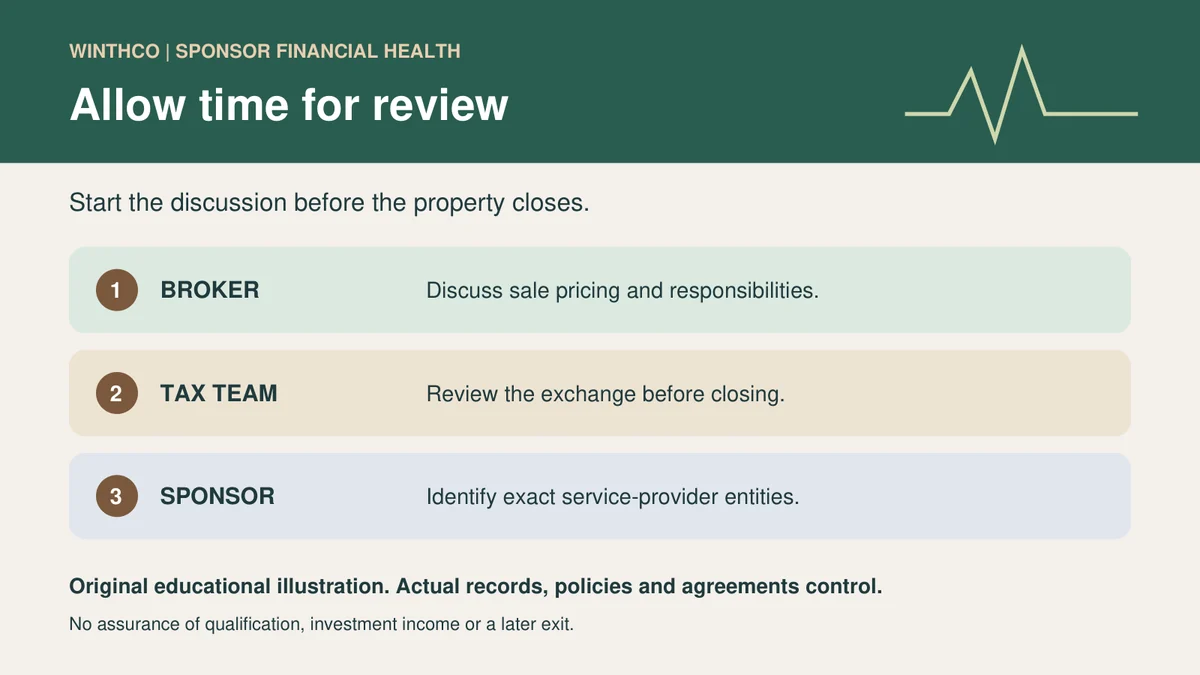
A rental owner considering passive replacement ownership is changing more than the name on a property statement. Tasks once handled personally may depend on a group of service providers. Begin that review while interviewing an appropriately licensed broker about valuation, marketing, commissions and closing coordination. Allow time for questions before a sale turns investment selection into a deadline-driven decision.
Winthco's discussion of DST sponsors provides background for the investment conversation. A large portfolio or familiar company name is not a financial-health conclusion. Ask which legal entity sponsors the offering, which entity supplies ongoing services and which entity would owe any promised support. The same brand may appear across documents without creating identical obligations for every company using it.
Share your timeline and investment range. A Winthco team member will follow up with you.
Start with the ownership and service relationships described in the private placement memorandum and related agreements. Identify the trust, trustee, asset manager, property manager and any master tenant. Write down the exact legal names rather than abbreviations. If an affiliate provides more than one service, ask how that arrangement is disclosed, compensated and monitored. Do not assume every offering uses the same structure.
Then distinguish assets held by the property-owning vehicle from resources reported by a sponsor or parent. A statement about total real estate overseen does not establish cash available to meet a particular company's bills. Ask what the reported figure measures, which entities it includes and when it was calculated. This is an interpretation question, not a reason to assume the figure is misleading.
Use our DST offering-document review guide to organize the source material. The useful output is a short explanation of who owes what to whom, supported by agreement references. If the documents do not answer a material question, request clarification through the recommending professional and counsel. A verbal description of a corporate family should not substitute for the actual obligation.
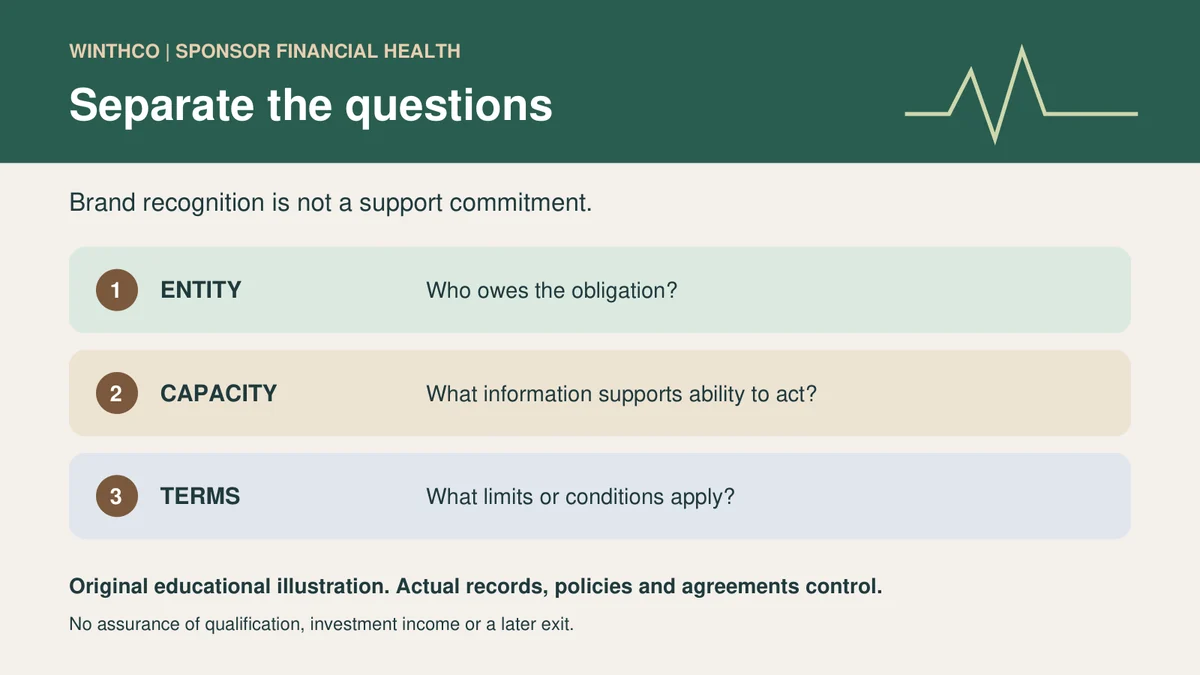
Ask what current financial statements are available for the entities whose performance matters to the investment. Note the reporting period, whether statements are consolidated or entity-specific, and whether they have been audited, reviewed or prepared internally. These descriptions are not interchangeable. Have an appropriately qualified professional explain what the statements establish and what additional information would be needed.
Questions can include available cash, upcoming obligations, recurring service revenue and dependence on new offering activity. Ask whether the information covers the business that will provide ongoing administration, rather than only a different affiliate. Avoid inventing a universal minimum cash balance or leverage threshold. The relevant obligations, business model and available disclosure differ, so a single ratio cannot settle the review.
Consider a hypothetical sponsor that reports substantial assets under management but gives little information about the company responsible for investor reporting. The investor asks for entity-specific clarification and a continuity explanation before committing. This invented example does not imply that any named sponsor is financially weak. It illustrates why the size of an investment platform and its ability to perform a particular service are separate questions.
Discuss your DST questions with Winthco →
Do not budget around an assumed sponsor rescue. Ask whether any support described in the presentation is a contractual obligation, a limited commitment or merely a statement about past practice. Counsel should identify the obligor, beneficiary, limits, conditions and duration of any written undertaking. Financial capacity and legal responsibility are separate issues, and both can matter when evaluating the value of that undertaking.
If past support is mentioned, ask what happened, which entity supplied it and whether the present offering has comparable terms. A past voluntary action does not by itself create a future obligation. Likewise, the ability to provide funds today does not establish that the same resources will be available later. Keep unsupported support assumptions out of the household cash-flow plan.
This review also needs the tax team. IRS Revenue Ruling 2004-86 addresses a specific investment-trust arrangement with restricted powers, including restrictions on additional contributions and refinancing in its stated facts. It is not a universal operating manual or approval of every proposed response to distress. Ask counsel and the CPA to evaluate any contemplated remedy under the actual trust structure before relying on it.
Ask who maintains investor records, prepares reports, coordinates tax information and communicates about material events. Identify the contractual process for a service-provider change, including any required consent, notice, expense or transition assistance. The goal is to understand the existing arrangement, not to assume investors can independently replace a provider. Our property manager change discussion covers related operational questions.
Separate everyday succession planning from financial distress. Losing a key employee, replacing software and facing a disrupted service provider are different events. Ask whether the continuity explanation covers access to records and responsible contacts, not simply a statement that another team member will help. Request clarification about who would communicate with investors if normal channels became unavailable.
Do not infer legal outcomes from a simplified organization chart. Whether an affiliate's financial problems affect another entity, a contract or property operations depends on facts and governing documents. An attorney should evaluate those questions when material. This article does not determine bankruptcy treatment, creditor priority or whether a particular structure would isolate an investor from losses.
WATCH & LEARN
Accruit explains DST replacement ownership. Third-party background, not an assessment of sponsor financial health or a Winthco affiliation. Original resource · Watch on YouTube ↗
Educational context only. The discussion does not establish the suitability, returns or tax treatment of an investment.
The SEC warns that private placements can involve limited disclosure, severe illiquidity and total loss. DST interests are generally available only to accredited investors and are offered through a private placement memorandum. Eligibility is not a finding that the investment fits your finances. Fees, property performance, debt, tenant concentration and sponsor execution can all affect results; distributions may fall or stop.
FINRA Notice 23-08 discusses reasonable investigation of recommended private placements, including the issuer, management, assets, claims and use of proceeds. Ask the recommending professional how material concerns were evaluated and what remains unresolved. A third-party report is an input to the discussion, not a substitute for understanding the recommendation. Review compensation and affiliate relationships alongside the financial information.
Several DSTs may share operational dependencies even if their properties are different. Compare sponsor, manager and reporting-provider exposure across your holdings. Our sponsor evaluation discussion offers broader questions, while this article focuses on financial capacity and service continuity. Diversification may reduce some concentration but cannot eliminate investment risk or make an illiquid holding available for emergency spending.
If a deferred exchange is contemplated, involve the CPA, attorney and qualified intermediary before closing or receiving proceeds. Section 1031 can defer eligible gain on qualifying business or investment real property when its requirements are met; it does not eliminate tax. Ordinary deferred exchanges require identification within 45 days and receipt by the earlier of 180 days or the tax-return due date, including extensions. Cash or other non-like-kind consideration can create recognized gain.
A potential later Section 721 contribution is a separate possibility, not a sponsor-health remedy or guaranteed exit. Ask who controls a proposal and what conditions, valuation procedures, costs and restrictions would apply. Ordinary REIT shares and partnership units are not direct Section 1031 replacement real estate. Have tax and legal advisers evaluate an actual proposal rather than treating a presentation's possible sequence as settled.
Evaluate the initial DST on terms that remain workable if no later transaction occurs. A sponsor's intention to pursue a future arrangement does not fund today's expenses or establish a redemption date. If required information cannot be obtained before committing, discuss alternatives with the professional team. Exchange timing does not make an unresolved investment risk disappear.
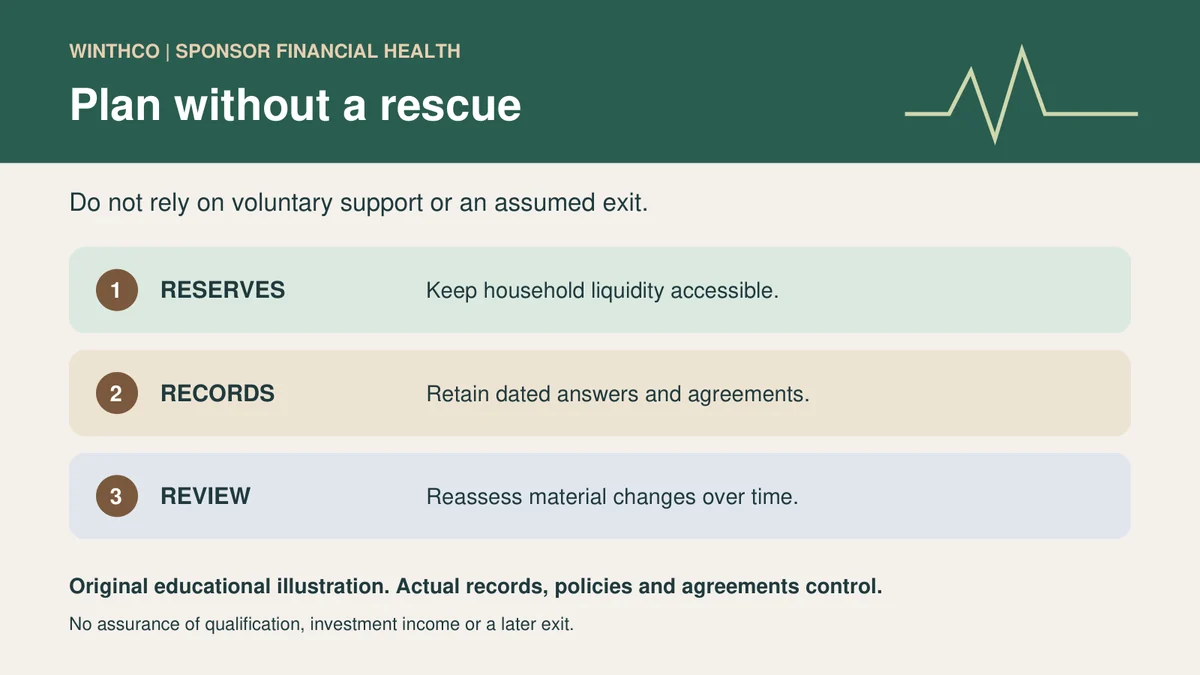
Keep essential household reserves outside assumptions about distributions, sponsor assistance or a future sale. Review existing securities, savings, 401(k)s, IRAs, spending and concentration with a financial advisor. Retirement accounts are not exchange proceeds. Any rollover or transfer requires its own comparison of services, costs, protections and access; changing property ownership does not mean every other account should move.
Keep the PPM, agreements, financial information and written answers securely, with their dates. Revisit material updates rather than treating the initial review as permanent. Winthco's wealth-management discussion can connect the investment decision with the broader balance sheet. Use either prospect contact form or the contact page for general goals and timing, not confidential account statements, tax documents or tenant information.
| Decision | Evidence to request | What to avoid assuming |
|---|---|---|
| Platform size | What does the figure measure? | Treat it as cash available for support |
| Support | Who has a written obligation? | Assume an affiliate will rescue the trust |
| Continuity | Who holds records and performs services? | Rely only on a familiar brand |
| Retirement | What liquidity is independently available? | Depend on a future exit |
No. Ask what a size measure represents and which entity's obligations matter. Assets overseen are not necessarily available cash.
Do not assume so. Have counsel review any written commitment and its conditions.
No. Understand the statements' scope and date. An audit is not a promise of future performance.
Do not assume that right exists. Review the agreements and applicable consent requirements with counsel.
It should not be treated as an assured solution. A future proposal may not occur and can carry new restrictions.
Sources checked November 22, 2026. This article explains general concepts; your facts and the applicable documents control.
Winthco DST services · Winthco evaluation overview · Editorial standards
DST due diligence
Learn how to evaluate a DST sponsor's history, property underwriting, debt, fees, conflicts, liquidity and exit plan before a 1031 exchange.
Read guide →DST investment due diligence
Selling a rental property? Learn how to review a DST private placement memorandum, compare fees and risks, and assess separate 721 UPREIT terms.
Read guide →DST due diligence
Learn who can replace a DST property manager, which documents control, and what to check before identifying a DST in a 1031 exchange.
Read guide →Explore Winthco’s main DST article collection
Share your timeline and investment range. A Winthco team member will follow up with you.