DST due diligence
How to evaluate a DST sponsor
Learn how to evaluate a DST sponsor's history, property underwriting, debt, fees, conflicts, liquidity and exit plan before a 1031 exchange.
Read guide →
Home / Learning center / DST investment due diligence
DST investment due diligence
Winthco Wealth Management · Updated October 14, 2026
A DST private placement memorandum describes an offering, but it is not regulatory approval or a substitute for independent review. Before selling investment property, organize your broker and exchange team. Then read the complete document set for ownership rights, property assumptions, fees, debt, liquidity and any separate 721 UPREIT provisions.
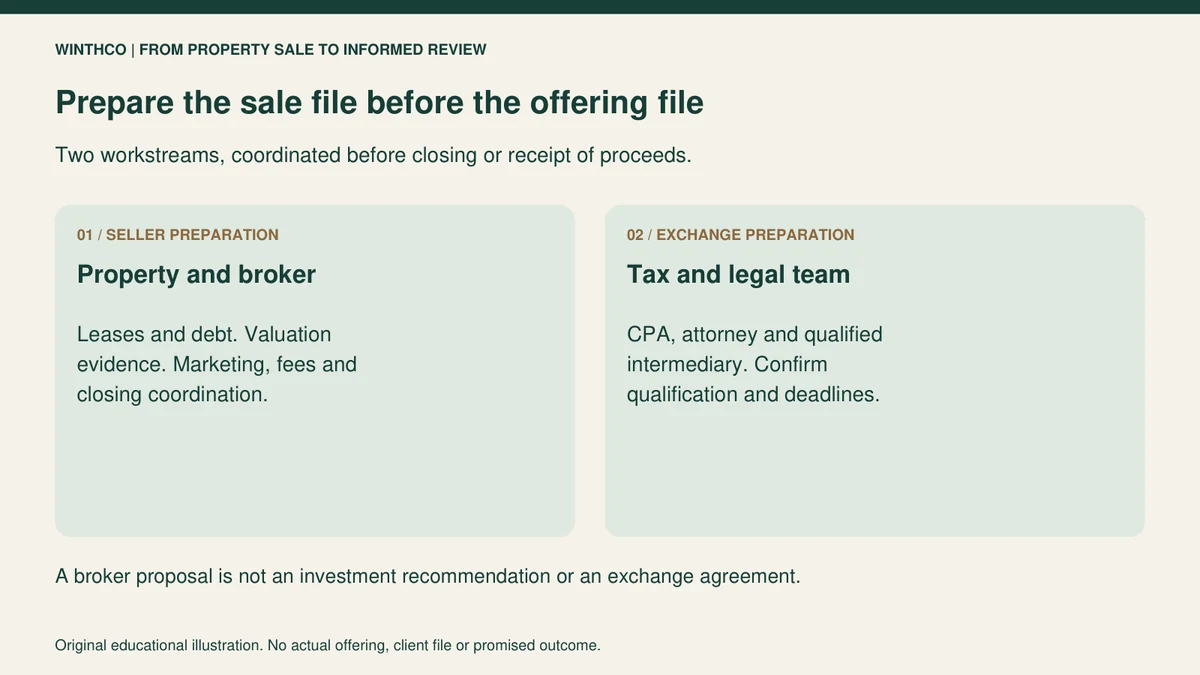
Start with the property you own, not an offering brochure. Interview licensed realtors or commercial brokers about relevant property experience, valuation evidence, marketing, fees and closing coordination. Check licensing and clarify who handles tenants, inspections and title questions. Assemble leases, improvement records, debt information and a list of household cash needs. No brokerage referral relationship is implied by this guide.
If a deferred exchange is contemplated, involve the CPA, attorney and qualified intermediary before closing or receiving proceeds. Request time to review possible replacement investments while the sale is being prepared. Winthco's DST offering evaluation overview can help frame that work, but neither a short overview nor this reading guide replaces the full private placement memorandum, its supplements and the underlying agreements.
Share your timeline and investment range. A Winthco team member will follow up with you.
Section 1031 can defer eligible gain when qualifying business or investment real property is exchanged for qualifying replacement real property and the requirements are met. Deferral can support a change in property exposure or management responsibility, but it does not eliminate taxes or investment risk. Compare continued ownership, hired management, a taxable sale and a partial exchange before assuming that all proceeds should be reinvested.
IRS Form 8824 instructions and Treasury Regulation 1.1031(k)-1 generally require identification within 45 days after transfer and receipt by the earlier of 180 days or the applicable federal return due date, including extensions. A sponsor's subscription deadline is a separate operational deadline. Use a written calendar for both. The steps for buying a DST should include document review and coordination with the intermediary, not simply choosing a projected distribution rate.
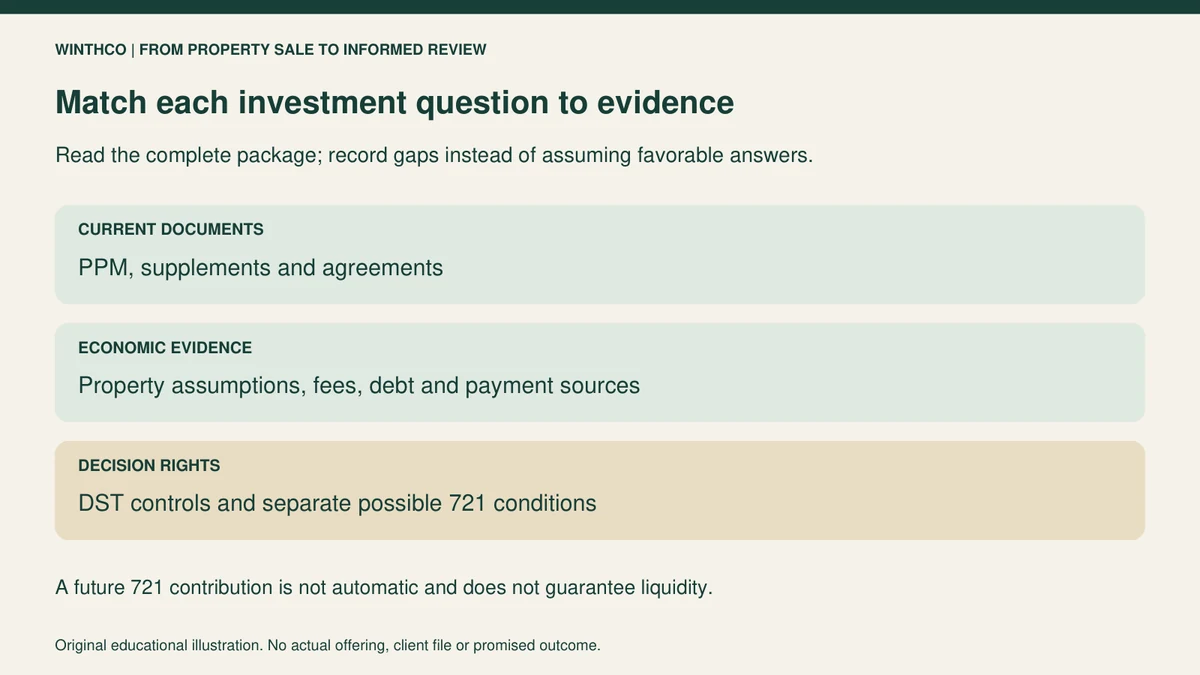
The SEC describes a private placement memorandum, or offering memorandum, as a document introducing the investment and providing offering and issuer information. Such documents generally are not reviewed by a regulator. A Form D filing does not mean SEC approval. Private offerings can involve less disclosure than registered investments, so a polished presentation is not evidence that all material questions have been answered.
Request the current PPM, every supplement, trust agreement, subscription agreement and referenced exhibits available for review. Record version dates and ask whether anything material changed after the initial package. Do not treat the executive summary as the whole investment. This guide supplies questions for a complete review, not a list of pages that may safely be skipped.
Identify the actual issuer, the interest being purchased, the properties or acquisition plan, and the parties controlling operations. Distinguish the sponsor, trustee, property manager, selling firm and any affiliated counterparties. Similar names can describe legally different entities. Ask counsel to explain which document establishes each right and how conflicting or incomplete descriptions should be resolved before signing.
Discuss your DST questions with Winthco →
Create a working question log outside the offering documents. For each issue, record the document and page, the supporting evidence requested, the professional responsible and the answer received. Ask about rent rolls, lease expirations, tenant concentrations, operating history, capital needs and property-condition information. Mark unavailable information explicitly. A blank cell should not quietly become an assumption that the condition is favorable.
Compare the business plan with the underlying evidence. Does projected revenue depend on higher occupancy, lease renewals or rent growth? Do expenses reflect taxes, insurance, repairs and management costs? Ask how reserve needs were estimated and what happens if those estimates are wrong. Treat forecasts as scenarios, not results that have already occurred. An attractive building photograph does not resolve an operating assumption.
FINRA Regulatory Notice 10-22 explains broker-dealer investigation responsibilities for recommended Regulation D offerings, including the issuer, management, assets, claims and intended use of proceeds. Its discussion of red flags emphasizes further inquiry rather than blind reliance on issuer statements. Ask your investment professional to explain the review performed for the actual offering. Your personal question log does not replace the firm's obligations or professional analysis.
Build a fee inventory from the entire package: selling compensation, organization and offering costs, acquisition expenses, financing charges, ongoing management payments and exit compensation. Note the recipient and whether it is related to the sponsor. Ask which fees are fixed, contingent, waived temporarily or paid from offering proceeds. A single headline commission does not describe every cost affecting the investment.
For a financed property, request the loan maturity, rate terms, extension conditions, covenants and assumptions about repayment. Compare those terms with the projected holding period. Ask what happens if property proceeds cannot repay the loan as expected. Debt-free ownership removes some borrowing exposure, not operating costs, property-value risk or restricted liquidity. Your CPA should analyze exchange debt allocation separately from financing suitability.
Trace anticipated payments to recurring operations and any other disclosed sources. Identify the authority to reduce distributions and the uses of reserves. Ask for a downside discussion involving weaker collections, unexpected expenses and a delayed sale. Cash received is not the same as total return, and distributions can fall or stop while principal is at risk. Record how those scenarios would affect your own spending plan.
WATCH & LEARN
Winthco Wealth Management presents its 1031 DST Welcome Video as general background. It does not review a particular PPM or establish suitability, tax treatment or an investment outcome. Use current offering documents and professional advice for the actual decision. Original resource · Watch on YouTube ↗
Educational context only. The discussion does not establish the suitability, returns or tax treatment of an investment.
Read who controls management, amendments, a property sale and responses to financial stress. Ask whether investor consent is required and whether you can remove or replace decision-makers. Review transfer restrictions, approval procedures and associated costs. Do not equate a legal ability to request a transfer with an available buyer, a dependable price or an enforceable redemption right.
IRS Revenue Ruling 2004-86 addresses a particular DST arrangement and its treatment for Section 1031. The ruling does not approve every trust or investment. Have the CPA and attorney assess the actual structure, including restrictions on trustee activities and provisions for changed circumstances. Keep tax qualification separate from property economics: a structure that may qualify for an exchange can still be unsuitable for the household.
If the documents contemplate a later contribution to a REIT's operating partnership, identify the decision-maker, valuation method, conflicts, investor choices and conditions that could prevent it. Compare the current DST without assuming that contribution happens. The 721 UPREIT planning framework provides background, but the actual contribution and partnership documents determine the proposed rights and obligations.
Section 721 generally concerns a contribution of property for a partnership interest, subject to exceptions and fact-specific analysis. IRS Publication 541 discusses complications involving liabilities and related transfers. Ordinary REIT shares and operating-partnership units generally are not direct Section 1031 replacement real property. A contemplated future transaction should not be presented as an automatic continuation of the original exchange.
Ask about partnership-unit fees, lockups, distributions and redemption or conversion conditions separately from the initial DST terms. A stated target date is not a personal liquidity promise. Later transactions can have tax consequences; selecting FIFO is not a guarantee of tax-free withdrawals of basis. If essential future terms are not available, record that uncertainty rather than filling the gap with a sales presentation.
Private DST offerings are generally limited to accredited investors and offered through the applicable private placement memorandum. They can involve illiquidity, limited control, sponsor conflicts, property and debt risk, changing tax rules and loss of principal. Accreditation is not a finding that the investment fits your situation. Missing evidence, unexplained inconsistencies or pressure to sign before questions are answered warrant further review.
Consider a hypothetical rental owner whose closing is approaching. The marketing summary suggests predictable payments, but the documents describe reserve-supported distributions and a conditional future contribution. The investor asks the advisor to reconcile those descriptions and the CPA to model alternatives, including retaining taxable cash. This is an illustrative decision process, not an actual client result. An approaching deadline does not resolve a material uncertainty.
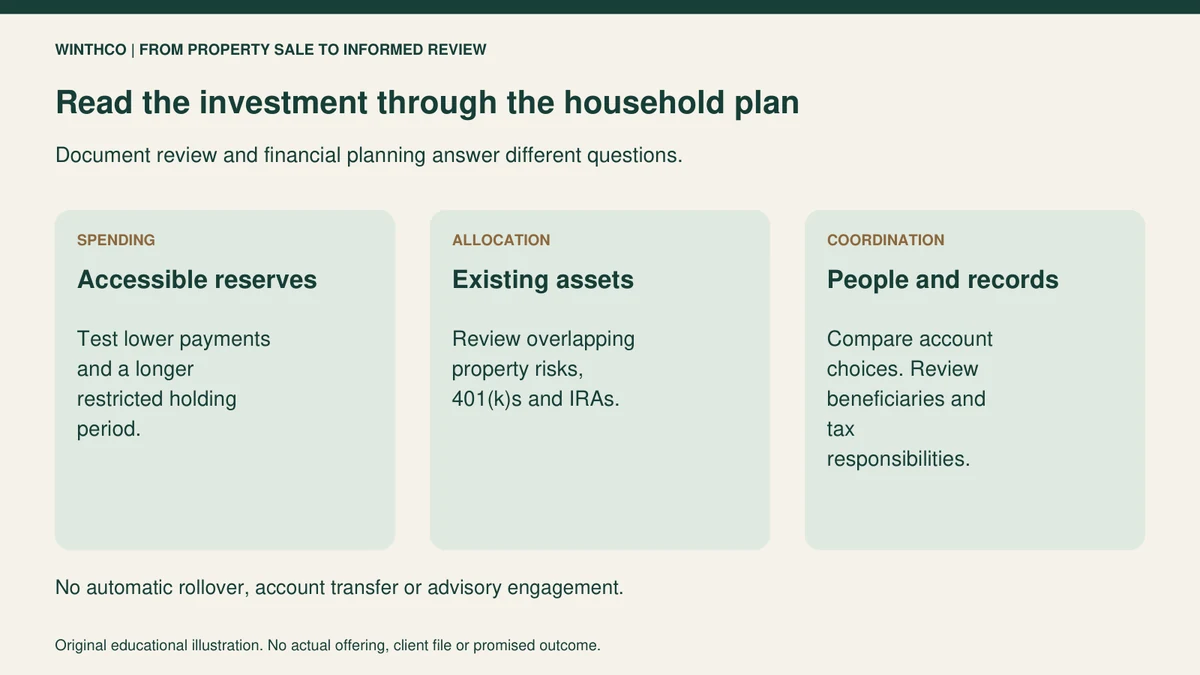
Use the findings in a broader Winthco financial-advising and wealth-management conversation. Compare the proposed commitment with existing financial assets, other property, 401(k)s, IRAs and retirement-income needs. FINRA's concentration guidance supports looking through different investment names for shared economic exposures. Decide which household needs require accessible reserves even if distributions decline or a property exit is delayed.
Retirement accounts are not themselves Section 1031 exchange proceeds. Review account alternatives, costs, services and restrictions before any rollover or transfer; moving assets is not an assumed outcome. Coordinate beneficiaries and estate documents with legal counsel and reporting with the CPA. Use the public prospect form for an initial conversation, not to upload private offering documents, financial statements or tax returns. Agree on a secure channel for sensitive materials.
If the offering includes a master tenant, review DST master-lease risk to distinguish the rent obligation, credit support and amounts available for investor distributions.
| Decision | Evidence to request | What to avoid assuming |
|---|---|---|
| Document identity | Current PPM, supplements and referenced agreements | The first PDF remains current |
| Economics | Fee recipients, loan terms and distribution sources | A headline rate describes total return |
| Investor rights | Trust, transfer and decision provisions | A transfer request creates a ready market |
| Possible 721 contribution | Valuation, conditions and partnership terms | A future transaction guarantees liquidity |
Generally, offering documents for private placements are not reviewed by regulators. A Form D filing is not SEC approval of the investment.
A summary is not the complete offering package. Review the current PPM, supplements and relevant agreements with your professionals before deciding.
No. The actual structure and transaction need tax and legal analysis; Revenue Ruling 2004-86 addresses specified facts rather than every DST.
Ask for the relevant provision and a written explanation. Do not assume an oral description creates a right that the legal documents do not provide.
No. Review whether a contribution occurs, what interests would be received and the restrictions and tax consequences of later redemptions or conversions.
Use the form to request a conversation and identify your general question. Arrange an approved secure channel before sharing confidential documents or personal financial records.
Sources checked October 14, 2026. This article explains general concepts; your facts and the applicable documents control.
Winthco DST services · Winthco evaluation overview · Editorial standards
DST due diligence
Learn how to evaluate a DST sponsor's history, property underwriting, debt, fees, conflicts, liquidity and exit plan before a 1031 exchange.
Read guide →Property sale planning
Prepare a rental sale with broker questions, 1031 timing, DST and separate 721 review, and retirement planning before committing proceeds.
Read guide →Alternatives and comparisons
Compare DST distributions with rental cash flow, fees, tax reporting and retirement spending before selling an investment property.
Read guide →Explore Winthco’s main DST article collection
Share your timeline and investment range. A Winthco team member will follow up with you.