DST due diligence
DST Reserves and Capital Repairs: What to Review
Before exchanging a rental into a DST, review repair budgets, restricted reserves and funding limits. Know which questions to ask before committing.
Read guide →
Home / Learning center / Local Guides
Local Guides
Winthco Wealth Management · Updated November 15, 2026
Before pricing a La Cañada Flintridge rental, verify whether the parcel uses public sewer or septic and who is responsible for repairs or connection work. Ask your broker to explain how unresolved costs affect net proceeds. If you are considering a 1031 exchange, arrange the qualified intermediary before closing and review any replacement DST separately.
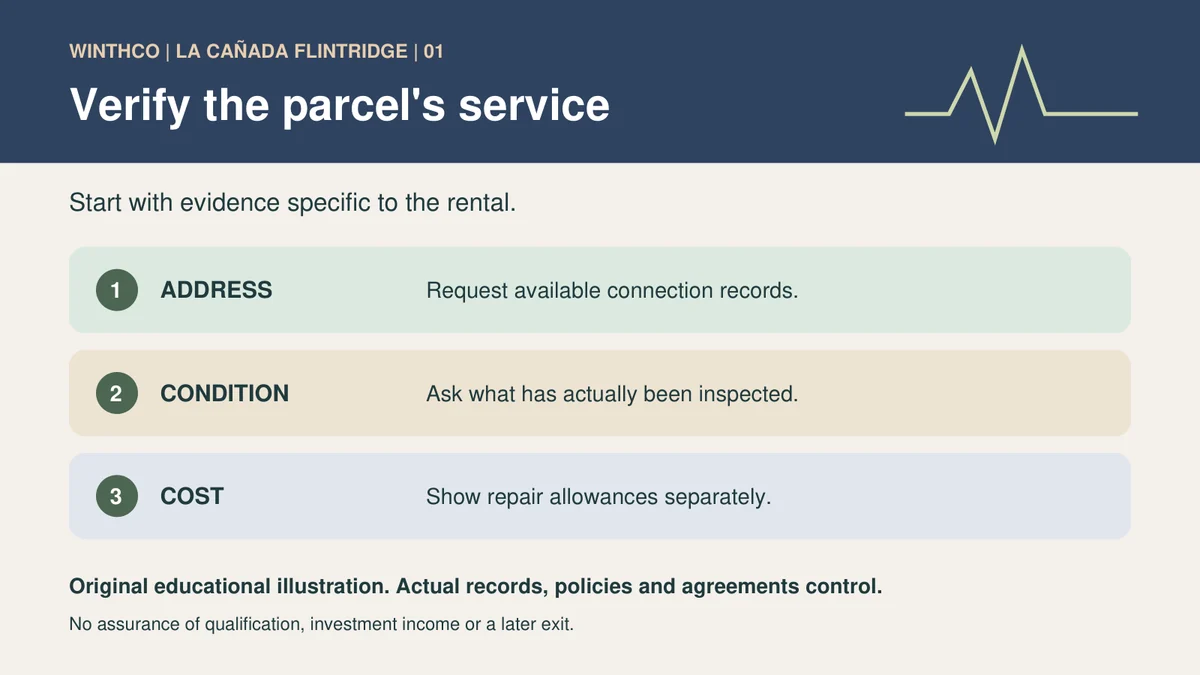
La Cañada Flintridge's hazard mitigation plan describes both public sewer and septic service in the city. A nearby connection does not establish that your rental is connected. The city's Public Works page describes how to request a sewer connection drawing or as-built record using the property address. Ask which records apply to the parcel and consult the appropriate authority and qualified professionals about the system actually in use. A drawing is not a condition report or a statement that no more work is needed.
Interview a licensed broker with relevant rental-sale experience. Ask for comparable sales, a plan for marketing an occupied property, compensation details and a net sheet that shows any proposed credits separately. Gather maintenance records, inspection findings, available permits, bills and any estimates for work. Ask your broker and attorney how to disclose unresolved conditions, and ask escrow which items need attention before closing. Do not assume that a program for eligible owner-occupants pays the costs of a rental property.
Share your timeline and investment range. A Winthco team member will follow up with you.
Create a proceeds estimate for more than one outcome. For example, compare paying for an agreed repair before transfer with negotiating a price change or credit, subject to your contracts and professional advice. Show the sale price, debt payoff and closing items on separate lines. Ask the CPA and qualified intermediary to review the actual proposed settlement entries. Do not assume that every seller cost is an exchange expense or that it receives the same tax treatment.
Arrange the qualified intermediary and involve your attorney and CPA before transfer or receipt of proceeds. In an ordinary deferred exchange of investment or business real property, written identification is generally due 45 days after transfer and receipt of replacement property is due by the earlier of 180 days after transfer or the federal return due date, including extensions. Cash or other non-like-kind consideration can result in recognized gain. Winthco's overview of DST replacement property explains one potential way to reinvest, not a promise of eligibility. Ask the CPA about California reporting if you are considering an out-of-state replacement.
Carry the same seller-side questions to the replacement property. Ask what water or wastewater infrastructure serves it, who is responsible for a failure, and what independent condition reports or other evidence support the sponsor's estimates. The most useful answer may be a lease clause, an inspection or an actual contract, not a line in the presentation. Look beyond plumbing to large recurring exposures such as roofs, paving, mechanical equipment or tenant improvements.
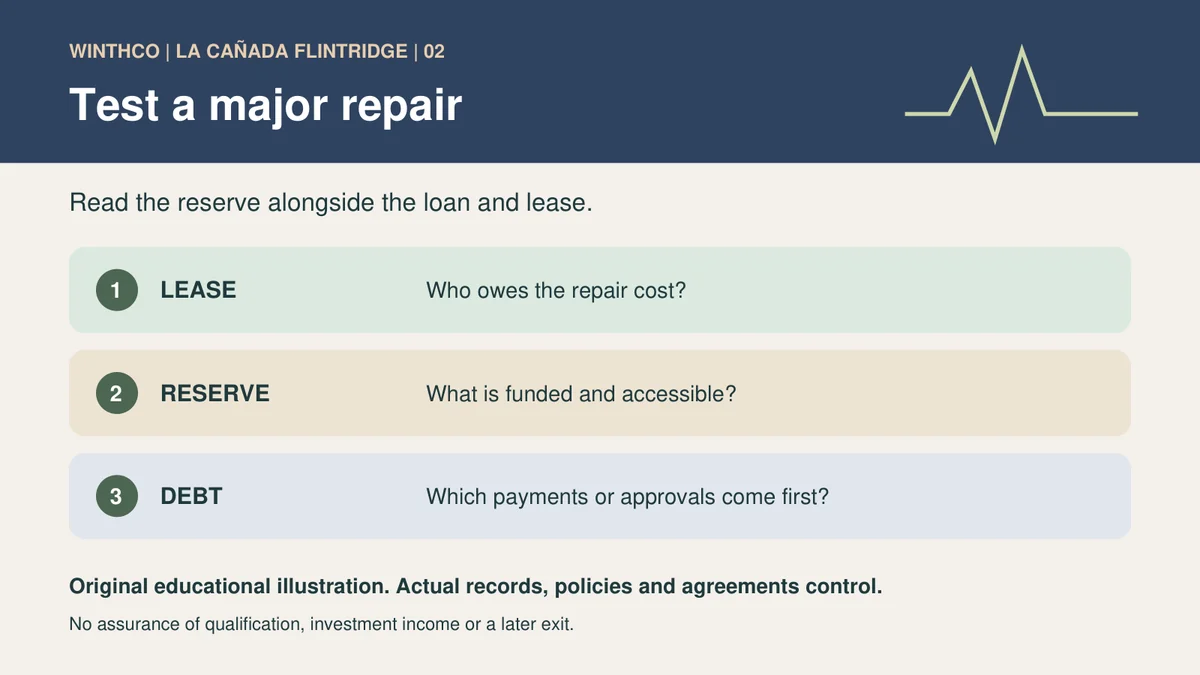
A qualifying DST interest can reduce hands-on property work. Revenue Ruling 2004-86 addresses a particular structure and does not make every DST eligible. Read the private placement memorandum, trust agreement and material lease provisions with your advisers. Use Winthco's guide to evaluating a DST offering to organize the questions. Find out how much investors pay at entry, which fees go to the sponsor and its affiliates, and what costs could arise at a sale. Ask which reported reserves are funded today, what conditions govern their use, and what would happen if a repair costs more than the reserve balance.
A reserve held by the lender may not be available for every use. Check the loan's maturity, debt service and the approvals needed to release funds. Review whether the rent obligation comes from the end tenant or a master tenant and who pays operating and repair costs if occupancy or collections fall. Compare the projected cash remaining after debt and expenses with a downside case where income drops and repairs cannot wait. A useful stress test identifies when distributions would be reduced or suspended and what creditors must be paid first.
Discuss your DST questions with Winthco →
Hypothetical: A La Cañada Flintridge landlord believes the rental is connected because there is a public line nearby. The broker asks for parcel records, and the owner sets aside the original sale estimate pending confirmation. The closing team identifies who will answer the connection and condition questions and when updated terms are due. The QI does not use the first proposed closing date as proof of transfer, and the CPA models the revised figures before the seller commits to a replacement.
The seller compares a direct replacement, a qualifying DST if available, and a taxable sale. The direct property gives the owner more decisions and work. The DST may reduce that work but leaves limited control and can be hard to sell; private placements generally provide less public information than registered offerings. Many DST offerings are limited to accredited investors. Fees, leverage, sponsor decisions and tenant concentration can impair income and value. Distributions may stop, and principal can be lost. Tax deferral, where available, does not make an unsuitable investment suitable.
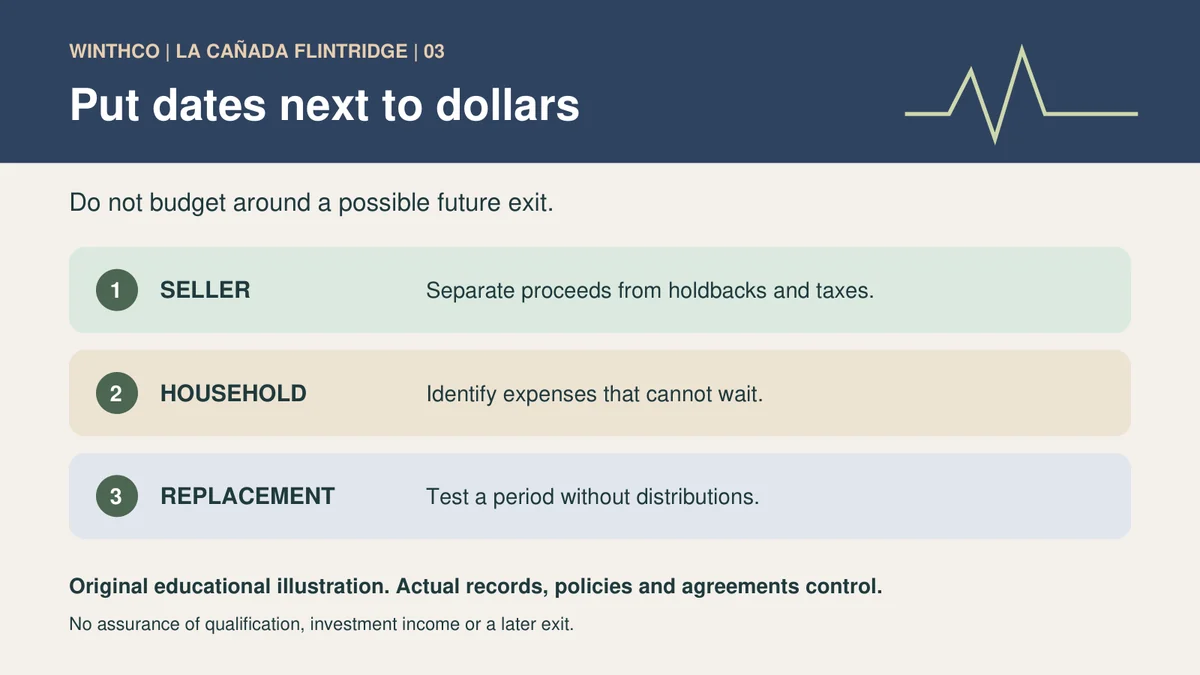
Do not assume it can. A Section 721 partnership contribution, if offered, is a separate transaction. In an UPREIT it may involve receiving an operating partnership interest. Ordinary REIT shares and operating partnership units are not direct replacement real estate for a Section 1031 exchange. Ask who decides whether to make and accept an offer, what happens if no transaction occurs, and when or how any resulting interest might be transferred or redeemed. Tax treatment and liquidity depend on actual terms, facts and law. A possible deal does not belong in a household cash calendar as available money.
WATCH & LEARN
Tina Colson-Jones of Equity Advantage 1031 Exchange discusses what a qualified intermediary does. This third-party education does not determine transaction or DST eligibility. Original resource · Watch on YouTube ↗
Educational context only. The discussion does not establish the suitability, returns or tax treatment of an investment.
Write down fixed obligations, expected taxes, near-term repairs and family spending before deciding how much to reinvest. Compare the direct replacement and DST using money available after costs, not the gross sale price. Ask how long you could meet expenses if distributions pause or the sale of an investment takes longer than expected. Consider whether an additional real estate position would leave too much wealth with one sponsor, property type, market or tenant.
Review taxable accounts, 401(k)s and IRAs separately with your advisers, and compare services, costs and access rules without assuming a rollover. Keep estate and beneficiary planning coordinated with your attorney. If part of the budget depends on proceeds that could be held back pending repair work, show the timing gap in months rather than treating the holdback as current cash. A planning discussion with Winthco can start with that proceeds estimate and your spending needs. Use the prospect form on this guide or the dedicated contact page; keep tax returns and tenant records out of the form. Ask for a payment schedule as well as a cost estimate. A credit paid at closing, a repair bill payable before listing, and a lender reserve released after inspection affect cash at different times. Build a short timeline with the broker, escrow officer and adviser showing who pays, what conditions must be met and when the amount becomes available. On the replacement side, ask what expenses the property would still owe even if no distribution were made. Putting dates alongside the dollars makes it easier to decide whether the household can tolerate a slower sale or a longer holding period without borrowing or abandoning other goals.
City-area context only. This is not a parcel map or a Winthco office.
| Decision | Evidence to request | What to avoid assuming |
|---|---|---|
| Relinquished rental | Parcel records, inspection and sale credits | A nearby sewer confirms a connection |
| Direct replacement | Repair scope, reserves and control | The buyer can ignore long-term costs |
| DST replacement | Funded reserves, lease obligations and debt | A distribution projection proves capacity |
| Retirement liquidity | Available cash, essential spending and taxes | A future 721 deal delivers immediate cash |
No. Request records for the address and confirm actual conditions with the appropriate professionals.
The ordinary deadlines are based on the transfer, not an amended estimate. Have the QI confirm dates after any closing change.
No. Check funding, control and permitted uses. A lender may have to approve a release.
Read the trust and offering terms for decision rights. Do not assume you can force a sale or transfer.
No. An investment adviser evaluates risk and fit, and a QI handles exchange mechanics. Ask a qualified CPA and attorney to handle tax and legal questions.
Sources checked November 15, 2026. This article explains general concepts; your facts and the applicable documents control.
Winthco DST services · Winthco evaluation overview · Editorial standards
DST due diligence
Before exchanging a rental into a DST, review repair budgets, restricted reserves and funding limits. Know which questions to ask before committing.
Read guide →Due diligence
Review Phase I reports, unresolved environmental questions and funding risks before a DST investment. Connect property evidence with exchange planning.
Read guide →Local DST guides
Selling an occupied Glendale rental? Verify tenant obligations before setting a closing date and comparing a 1031 exchange, DST and retirement cash needs.
Read guide →Explore Winthco’s main DST article collection
Share your timeline and investment range. A Winthco team member will follow up with you.