1031 exchange planning
Qualified intermediary for a DST 1031 exchange
Learn what a qualified intermediary does in a DST 1031 exchange and how to review agreements, fund controls, deadlines and professional roles.
Read guide →
Home / Learning center / Local DST guides
Local DST guides
Winthco Wealth Management · Updated November 9, 2026
If you plan to sell an occupied Glendale apartment property and consider a Delaware statutory trust, review each tenancy before promising a closing date or vacant possession. Then set up any 1031 exchange before closing. Compare a qualifying DST with a direct purchase and a taxable sale, especially if you need cash soon.
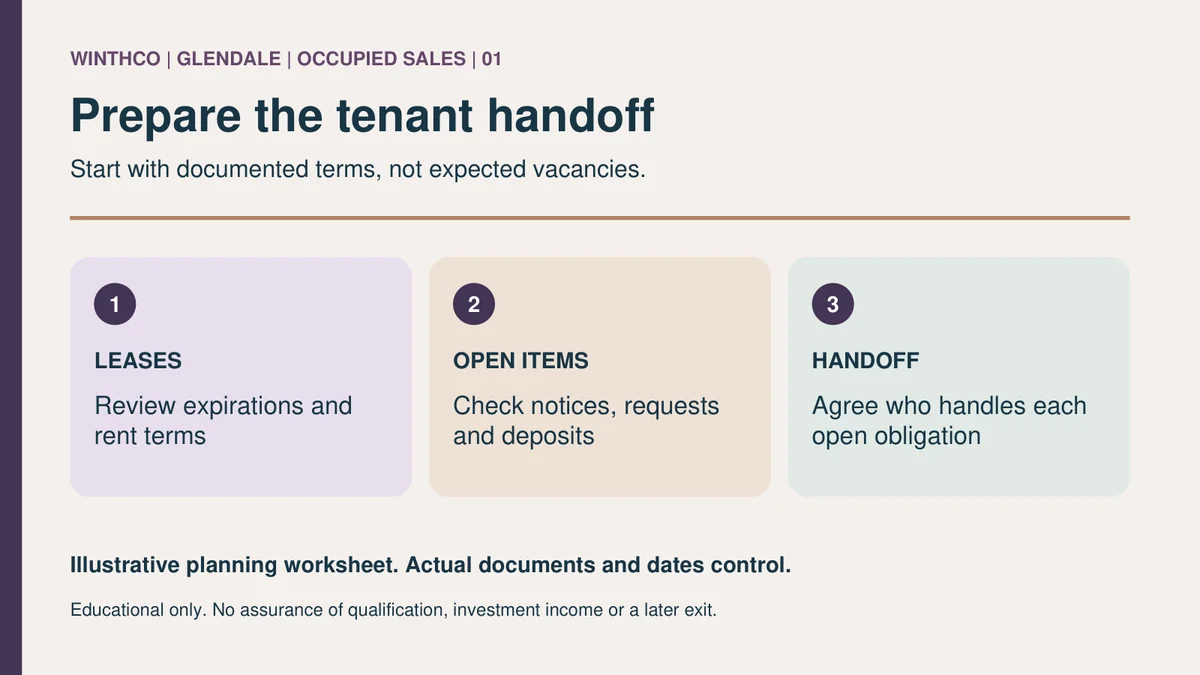
Interview a licensed broker who has closed comparable occupied multifamily sales. Ask for actual comparable transactions, how buyers underwrite existing leases, what sale costs and concessions are realistic, and how the buyer's lender may treat upcoming renewals. Request a marketing plan that shows documented rents and expenses rather than assuming near-term vacancies or higher rents. Give the broker an occupancy schedule with expiration dates and unresolved issues, but agree on a secure way to share leases and notices with authorized reviewers. Before listing, ask whether the likely buyers prefer an occupied sale and what diligence documents they need. The Inglewood rental registry and rent records guide offers a separate example of checking leases and actual collections against local records. See sewer and septic records before a rental sale for a separate local example of checking physical property records.
Glendale Municipal Code Chapter 9.30 includes provisions on offering written leases, just cause for eviction and relocation assistance. The city's Rental Rights Program booklet explains that applicability and exemptions can vary by provision. Ask a Glendale housing attorney or the city to confirm which rules apply to the property and each tenancy before giving notices, proposing changes or agreeing to deliver units vacant. Make a unit-by-unit list of lease terms, renewal offers, rent notices, deposits and pending requests. Do not assume the sale itself changes a lease or gives the seller a right to clear units. Have counsel and escrow document who will handle open obligations and tenant communications during the handoff.
Share your timeline and investment range. A Winthco team member will follow up with you.
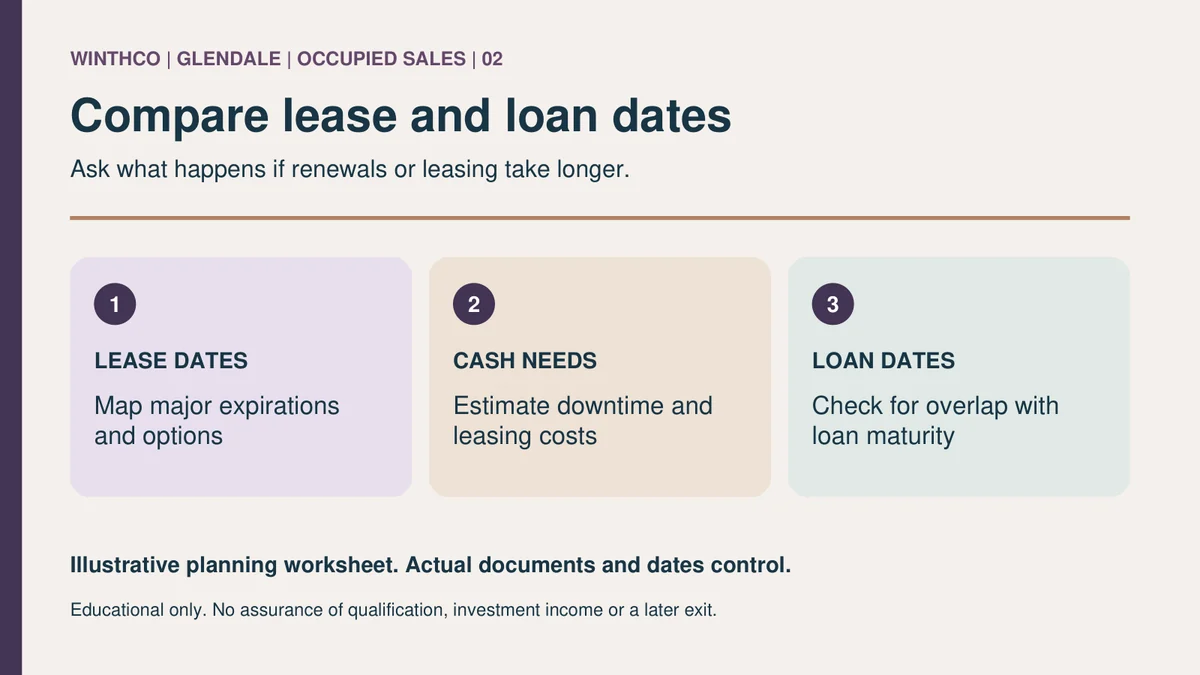
Consider a hypothetical six-unit apartment property with two leases expiring during escrow. A buyer who underwrites those units at existing rents may need different financing or terms than a buyer counting on immediate turnover. Ask the broker for a closing range under both the current deal and a delay, without assuming that rent or occupancy changes are lawful or achievable. Have a CPA, real estate attorney and qualified intermediary review the proposed structure before closing or receipt of proceeds. Winthco's questions for choosing a qualified intermediary can help you prepare. The intermediary handles the exchange arrangements; counsel handles the contract and tenant issues, and the CPA evaluates tax consequences.
Discuss your DST questions with Winthco →
A deferred Section 1031 exchange generally requires identifying replacement property within 45 days after transferring the property sold, and receiving it by the earlier of 180 days after transfer or the federal return due date, including extensions, for the year of transfer. The actual transfer matters, not the day the broker lists the property. A delayed sale can shift those dates, but a replacement seller's delay does not restart an already running clock. Give your CPA the basis and depreciation records, closing estimate and loan payoff. Ask how cash retained, other non-like-kind consideration or net debt relief may affect recognized gain. If considering out-of-state replacement property, ask about California reporting, including whether Form FTB 3840 applies.
Start with the distinction between an interest's potential tax eligibility and whether it is a suitable investment. IRS Revenue Ruling 2004-86 addressed a particular trust and its ownership interests on those facts. It is not approval of every Delaware statutory trust. Use the offering document review guide for DST investors to organize questions about the actual trust agreement and private placement memorandum. Ask for a dated rent roll, the share of rent from the largest tenants, renewal options and major lease expirations. Separate contracted rent from collected rent, and ask whether a master tenant stands between occupant rent and the trust. Review that entity's obligations, financial condition and what the agreement says if it cannot pay.
WATCH & LEARN
Tina Colson-Jones of Equity Advantage 1031 Exchange explains exchange arrangements and the handling of sale proceeds. Third-party education, not advice about Glendale rental law or any specific transaction. Original resource · Watch on YouTube ↗
Educational context only. The discussion does not establish the suitability, returns or tax treatment of an investment.
Review the sources of projected distributions and identify costs already deducted. Distinguish offering and acquisition charges from ongoing administration, property management, debt service, potential sale expenses and any fees a separate later transaction might carry. Ask which reserves are funded, what they can pay for and who decides when to use them. For a hypothetical property with several expirations near a loan maturity, review a scenario in which renewals take longer, leasing costs rise and refinancing is more expensive. Ask what the trust documents allow managers to do in that situation. Even with several holdings, exposure can remain concentrated in one sponsor, lender, property sector or region.
Put both properties on the same calendar. One may have several smaller tenants whose leases expire together; another may depend on one tenant with years left on the lease. In the first case, ask about downtime, leasing commissions and cash needed for tenant improvements. In the second, ask whether the tenant or a separate guarantor can meet the contract and what would happen if that tenant leaves. Check whether either property's debt payments or maturity overlap with those potential problems. A longer remaining lease term does not, by itself, show that rent is collectible or that the sponsor can cover a major interruption.
Direct ownership may allow more control over financing, repairs and the timing of a sale, but it carries operating responsibility and can also be illiquid. A DST can reduce day-to-day management without removing property or sponsor risk. Private placements are generally directed to accredited investors; their disclosures, transfer limits and holding periods may differ from public investments. Distributions can decline or stop, there may be no practical secondary buyer, principal may be lost and tax rules can change. Compare a taxable sale and a direct replacement as alternatives, and set aside the funds you need without counting on projected distributions. Neither tax eligibility nor meeting an identification deadline makes an investment suitable.
Treat a potential contribution to an UPREIT operating partnership as a separate decision. It may never be offered, and a DST purchase does not create an entitlement to convert or redeem later. Ordinary REIT shares and operating partnership units are not direct Section 1031 replacement real property. If a proposal arises, ask who controls the decision and how valuation, holding restrictions, costs, future redemptions and tax consequences are determined. Have your attorney and CPA evaluate the actual terms and check what happens if the transaction does not proceed. Keep your essential liquidity plan separate from any possible exit.
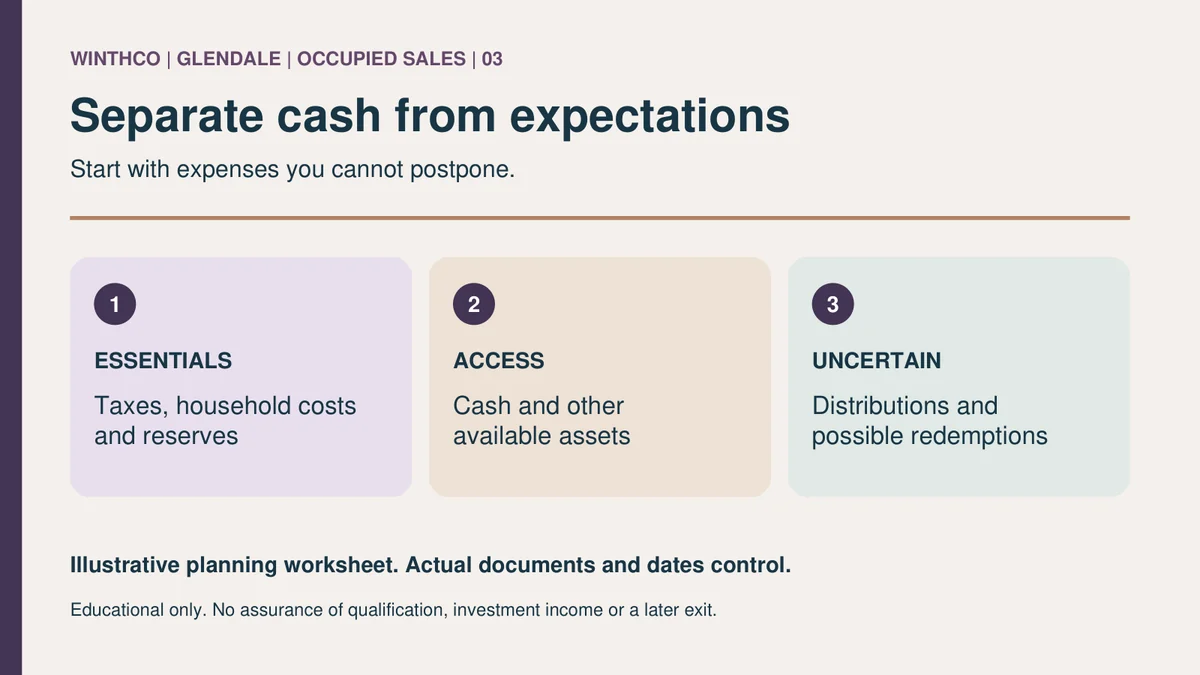
List the cash you need for taxes, living costs, reserves and planned expenses before comparing the sale and reinvestment paths. Ask which assets can cover those expenses without selling a private investment or waiting for distributions. Review existing taxable investments, IRAs and 401(k)s for costs, services, investment options and beneficiary arrangements; do not assume a transfer or rollover is appropriate. A Winthco Wealth Management planning conversation can help evaluate how much real estate exposure and illiquidity fit alongside the rest of your assets, while your own tax and legal professionals address the transaction. Use the rental sale preparation checklist to start assembling a decision file, and leave sensitive records out of an online inquiry.
Agree on decision points in advance. For example, if the buyer needs vacant delivery, ask counsel whether the proposed terms are workable rather than making a promise that depends on tenant decisions. If the closing moves, have the intermediary recalculate the relevant dates and check whether replacement options remain available. If a potential DST fails your review, ask your advisers to compare alternatives instead of assuming you must buy it. Keep a written record of the facts behind each choice.
Geographic context only. This is not a Winthco office or parcel map.
| Decision | Evidence to request | What to avoid assuming |
|---|---|---|
| Occupied sale | Current leases, notices, obligations and buyer underwriting | A sale will create a vacancy |
| Deferred exchange | Actual transfer date, written identification and receipt | A replacement delay resets the clock |
| Qualifying DST | Trust terms, tenant exposure, reserves and fees | Less work means less risk |
| Retirement planning | Cash on hand, other income and future expenses | A possible 721 exit is available cash |
Do not assume that it does. Have a local attorney review the leases, applicable law and any proposed notices before making possession commitments.
Applicability and exemptions vary by provision. Ask the city or your attorney to confirm the rules for the property and tenancy.
A qualifying trust interest may be an option if your exchange meets the applicable requirements. Coordinate before closing and assess the actual offering and its risks.
Review the trust, lease and management agreements to see who controls those decisions. Do not assume that individual investors can negotiate renewals or replace a manager.
No. It is a geographic reference for the city, not a branch or parcel map. The campaign's verified office is in Simi Valley.
Sources checked November 9, 2026. This article explains general concepts; your facts and the applicable documents control.
Winthco DST services · Winthco evaluation overview · Editorial standards
1031 exchange planning
Learn what a qualified intermediary does in a DST 1031 exchange and how to review agreements, fund controls, deadlines and professional roles.
Read guide →Property sale planning
Prepare a rental sale with broker questions, 1031 timing, DST and separate 721 review, and retirement planning before committing proceeds.
Read guide →DST due diligence
Learn how DST lease expirations, renewal assumptions, downtime and re-leasing costs can affect cash flow. Prepare a document-based review.
Read guide →Explore Winthco’s main DST article collection
Share your timeline and investment range. A Winthco team member will follow up with you.