Vacation rental 1031 planning
Vacation rental 1031 exchange into a DST
Learn how vacation-rental use, IRS safe-harbor rules, deadlines and DST risks affect a potential 1031 exchange.
Read guide →
Home / Learning center / 1031 exchange planning
1031 exchange planning
Winthco Wealth Management · Updated November 6, 2026
Selling a duplex you live in and partly rent can require two separate tax analyses. The home unit may qualify for the Section 121 exclusion, while the rental unit may qualify for a Section 1031 exchange. Have your advisers document the split and prepare the exchange before closing or taking control of proceeds.
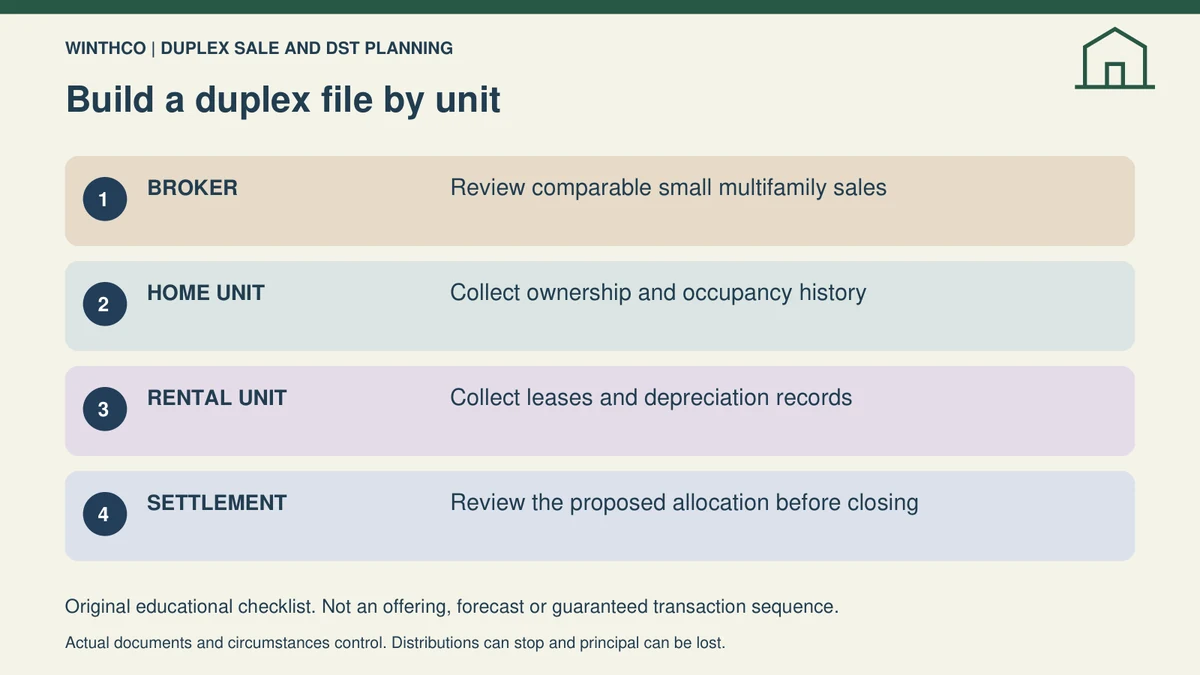
Interview a licensed broker who has sold similar small multifamily properties. Explain which unit you occupied, when you lived there and how the other unit was rented. Ask for comparable sales, an estimate of net proceeds, proposed fees and a marketing plan that reflects actual rents and occupancy. If you will need money for a new home or a move, set those needs out early. The broker can advise on pricing and marketing, but the advertised price and the tax allocation serve different purposes.
Gather the purchase and closing documents, leases, occupancy dates, improvement invoices, depreciation schedules and the proposed settlement figures. Note any periods when the use of either unit changed. Ask your CPA what supports the allocation of basis and amount realized. IRS Publication 523 addresses separate rental portions of a property and calls for using the allocation method used to determine depreciation adjustments. Two units are not automatically equal in value, and a new split should not be chosen simply because it produces a preferred tax estimate.
Share your timeline and investment range. A Winthco team member will follow up with you.
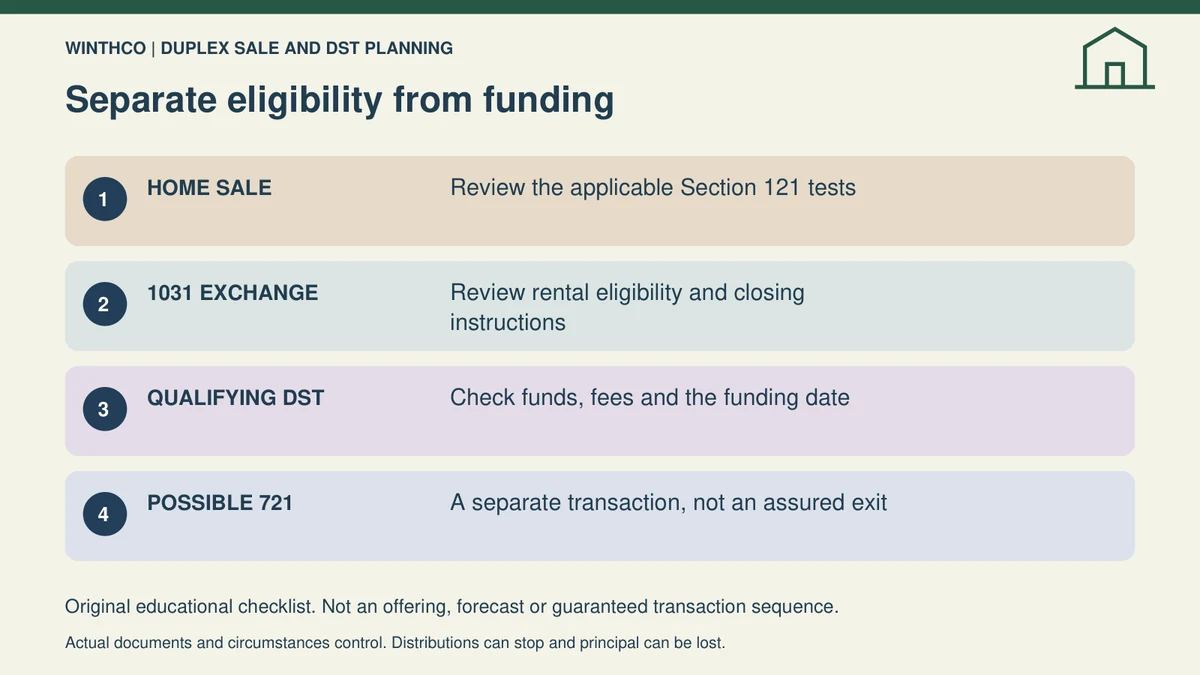
Have your CPA, attorney and qualified intermediary review the transaction before closing or taking control of proceeds. Give them the unit history, ownership and expected settlement details. An intermediary can coordinate exchange documents and handling of the exchange funds, while tax and legal advisers determine what the proposed structure can support. Use Winthco’s overview of potential 1031 exchange benefits as background, not as a substitute for tailored advice. Ask who will review the allocation and how escrow should distinguish the home-sale and exchange components in the closing instructions.
Discuss your DST questions with Winthco →
Section 121 can exclude eligible gain on a principal residence if the applicable tests and limits are met. The usual ownership and use tests look for at least two years within the five years ending on the sale date; other restrictions and exceptions can apply. Section 1031 can defer eligible gain on qualifying real property held for investment or business, not on property used solely as a personal residence. The rental portion of an owner-occupied duplex is not automatically eligible for the home-sale exclusion just because the owner lived next door. Keep exclusion, deferral and currently recognized gain separate on your CPA’s worksheet.
IRS Revenue Procedure 2005-14 explains the order of operations when an exchange qualifies under both provisions: apply Section 121 before Section 1031. That guidance does not make both provisions available on every sale. A separate unit rented to tenants, a room used as a home office and a unit converted from personal use to rental can present different facts. Ask your CPA about periods of nonqualified use, the separate-unit rules and amounts attributable to depreciation. The home-sale exclusion does not cover qualifying depreciation-related gain for periods after May 6, 1997. Ask separately whether exchange treatment is available for any remaining eligible gain.
WATCH & LEARN
Winthco Wealth Management introduces general DST educational resources. This video does not address duplex allocations or establish investment or tax outcomes. Original resource · Watch on YouTube ↗
Educational context only. The discussion does not establish the suitability, returns or tax treatment of an investment.
Imagine you live in one unit and have rented the other under a documented lease. You want to buy another home, and a DST sponsor presents a potential replacement before your duplex closes. The broker’s net-proceeds estimate shows the whole sale, not a tax allocation or an exchange funding instruction. First ask the CPA to reconcile the units, purchase basis, improvements and depreciation. Then ask counsel, escrow and the intermediary to coordinate what belongs in the exchange and what is available outside it. Only then compare actual replacement funding requirements with the amount expected to be available. This example illustrates a decision process, not a tax result.
In a typical deferred exchange, identify qualifying replacement real property within 45 days after the transfer and receive it by the earlier of 180 days after transfer or your federal return due date, including extensions. Confirm the dates and identification method with the intermediary. Cash or non-like-kind property can affect recognized gain, and liabilities and settlement costs can complicate the calculation. Do not assume that any cash taken at closing belongs to the residence or that the full sale price is available for reinvestment. Review both the proposed settlement and the replacement requirements before documents become final.
Prepare a timeline by unit rather than a single description for the whole building. Mark when you moved in or out, when tenants took possession and when each part was available for rent. Share records for any period a unit was vacant or used by family. Ask your advisers whether the facts support a business or investment use for the portion you hope to exchange, and whether the home-sale analysis needs a separate allocation. A change in use close to the sale is a reason to get advice, not a shortcut to eligibility.
Winthco’s DST replacement-property exchange overview can help frame your questions. Revenue Ruling 2004-86 addresses a specific trust and its restricted powers; it does not mean every DST interest qualifies. Review the actual trust and offering documents with your advisers and distinguish tax eligibility from investment fit. Ask about minimum funding, closing availability, debt maturity, tenant concentration, property expenses, reserves and sponsor fees. Delegating daily management can reduce your responsibilities, but you generally have less control over leasing, repairs, financing and sale decisions than an owner of direct replacement property.
Ask for the actual amount and funding date in writing. If the replacement exceeds the funds expected from the rental portion, do not assume you must draw from the money earmarked for housing. Compare a different replacement, an eligible partial exchange or a taxable sale, and ask your CPA to explain the consequences of each.
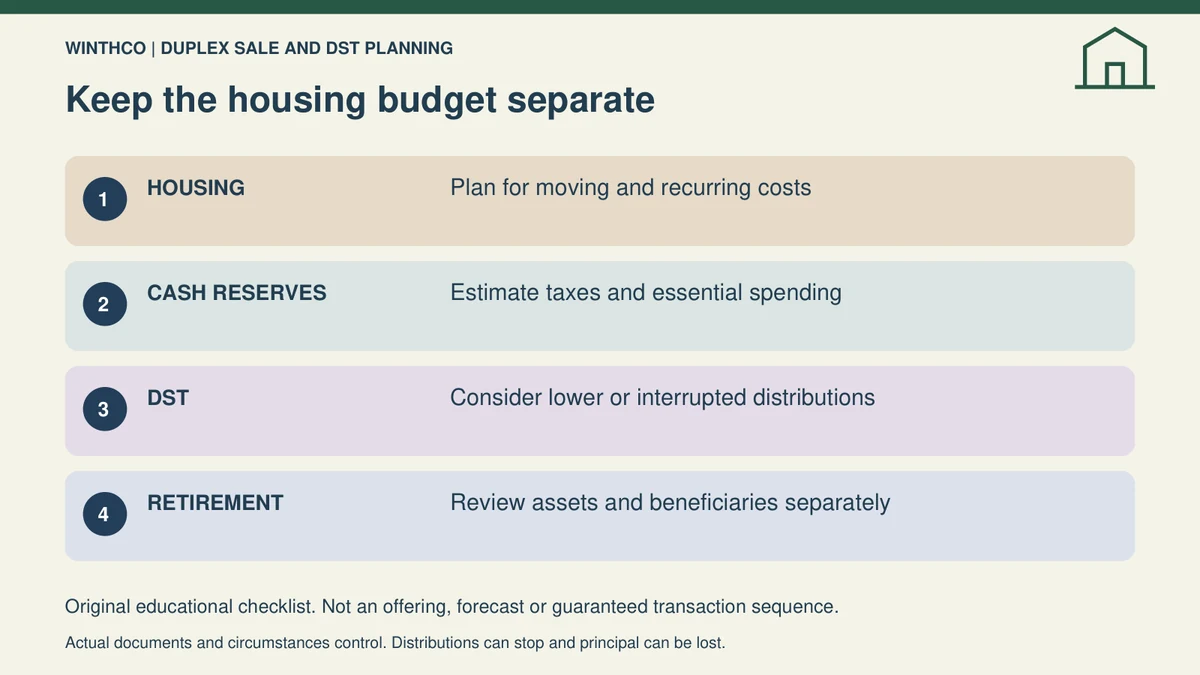
If the DST reduces distributions just as your housing costs rise, selling an interest quickly may not be practical. Private offerings can provide limited disclosures and impose restrictions on transfer. DST offerings are generally for accredited investors. Review one-time and ongoing fees, sponsor and property risk, lender terms and how long you could hold without access to the invested principal. A delayed sale, vacancy, higher expenses or an impaired loan can reduce cash flow and lead to loss. Compare your exposure to real estate across all holdings rather than assuming a different property address provides diversification.
Treat a potential later contribution to an operating partnership as a separate transaction. Section 721 generally addresses property contributions in exchange for a partnership interest, subject to exceptions and actual terms. A DST purchase does not assure such a contribution, a redemption date or a specific tax outcome. Ordinary REIT shares and operating partnership units are not direct replacement real property under Section 1031. Ask who would approve a contribution, what liabilities and restrictions could matter and whether any eventual redemption could be delayed or taxable. Do not count a possible later transaction as money available for a home purchase.
Keep accessible reserves for the move, housing expenses and estimated taxes separate from a projected DST distribution or exit. Compare a taxable sale, direct replacement and a qualifying DST with your advisers, including the amount of management and liquidity each would leave you. Review taxable assets, IRAs, 401(k)s, beneficiary arrangements and retirement income separately from exchange proceeds. Compare account costs and services without assuming a rollover is appropriate. Use the prospect forms here or the dedicated contact page to discuss your property decision and broader financial plan with Winthco Wealth Management.
| Decision | Evidence to request | What to avoid assuming |
|---|---|---|
| Home unit | Ownership, principal use and applicable limits | Living in one unit qualifies the entire duplex. |
| Rental unit | Lease history, depreciation and investment use | A rental listing alone establishes eligibility. |
| Closing | Written allocation and exchange instructions | You can fix how proceeds were handled after settlement. |
| DST decision | Funding, fees, control and reserves | Eligibility makes the investment suitable. |
Do not assume so. The home and rental uses can require separate treatment, based on the facts and supporting records.
No. Have a CPA review the basis and sale allocation using the facts and applicable reporting rules.
The exclusion does not cover gain attributable to applicable depreciation adjustments for periods after May 6, 1997. Ask how the rental and exchange rules interact in your case.
No. Compare direct ownership, a qualifying DST or a taxable sale with your advisers.
Before closing or taking control of proceeds. Bring the ownership, unit history and proposed closing details to the conversation.
Sources checked November 6, 2026. This article explains general concepts; your facts and the applicable documents control.
Winthco DST services · Winthco evaluation overview · Editorial standards
Vacation rental 1031 planning
Learn how vacation-rental use, IRS safe-harbor rules, deadlines and DST risks affect a potential 1031 exchange.
Read guide →1031 exchange planning
Learn what a qualified intermediary does in a DST 1031 exchange and how to review agreements, fund controls, deadlines and professional roles.
Read guide →DST tax planning
Learn how carryover basis, depreciation recapture and tax records work when a 1031 exchange uses DST replacement property.
Read guide →Explore Winthco’s main DST article collection
Share your timeline and investment range. A Winthco team member will follow up with you.