1031 replacement property
DST vs 721 UPREIT after a property sale
Compare DST and 721 UPREIT paths, tax rules, ownership, liquidity, control and risks before a property sale or exchange.
Read guide →
Home / Learning center / California advisor guides
California advisor guides
Winthco Wealth Management · Updated November 3, 2026
A Los Angeles owner evaluating a DST advisor should first confirm the property's jurisdiction and sale-record requirements, then coordinate tax, legal and exchange advice before closing. Compare DST management relief with fees, limited control and illiquidity. Treat a possible 721 contribution as a separate decision and protect cash needed for household obligations.
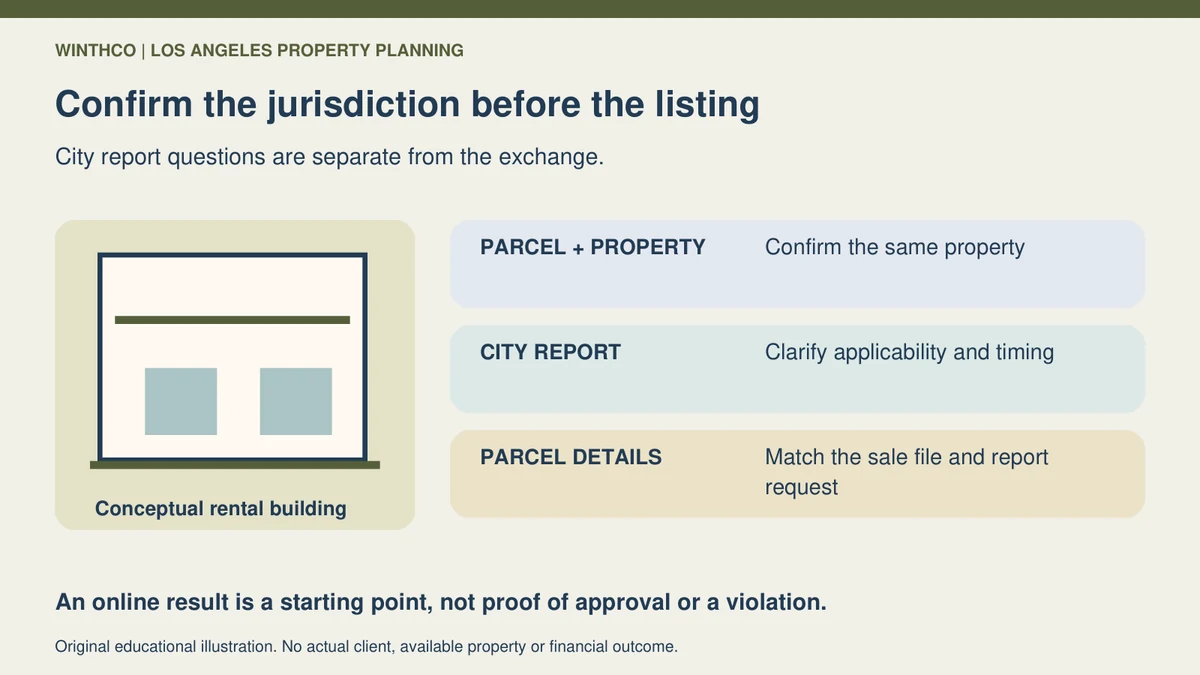
Start with the actual property, not the metropolitan label. Interview an appropriately licensed realtor or commercial broker about relevant property-type experience, valuation evidence, marketing, fees and closing coordination. Ask who will reconcile the parcel, legal description, leases and city records before the listing relies on them. Verify licensing independently and do not infer that an investment advisor also provides brokerage or legal services.
If a deferred exchange is contemplated, involve the CPA, attorney and qualified intermediary before closing or receiving sale proceeds. Discuss the expected debt payoff, transaction costs and cash needed outside the replacement investment. The 1031 exchange benefit discussion is background for that conversation, not a promise that every sale or replacement choice qualifies for deferral.
Share your timeline and investment range. A Winthco team member will follow up with you.
The Los Angeles Department of Building and Safety publishes a Residential Property Report process, also called Form 9 or RPR. Los Angeles Municipal Code Section 96.307 describes delivery requirements for covered sales or exchanges. Ask the broker, escrow team and counsel to establish applicability and delivery timing for the actual transaction before relying on a closing calendar.
Section 96.303 lists application details, including the legal description and assessor parcel number. Confirm that the property is within city limits before using the process. Do not apply that city process automatically to every property in Los Angeles County or treat a postal address as the complete jurisdictional analysis. Match the property description and assessor information across the sale file, and ask the responsible officials about discrepancies.
Use the report and application as records to review, not as an appraisal, title insurance or a substitute for inspection and legal advice. Ask the professional team which additional obligations and exceptions apply to this property rather than assuming one report resolves every sale issue. The city-area map below is geographic context, not a Winthco office, property boundary or representation of an available investment.
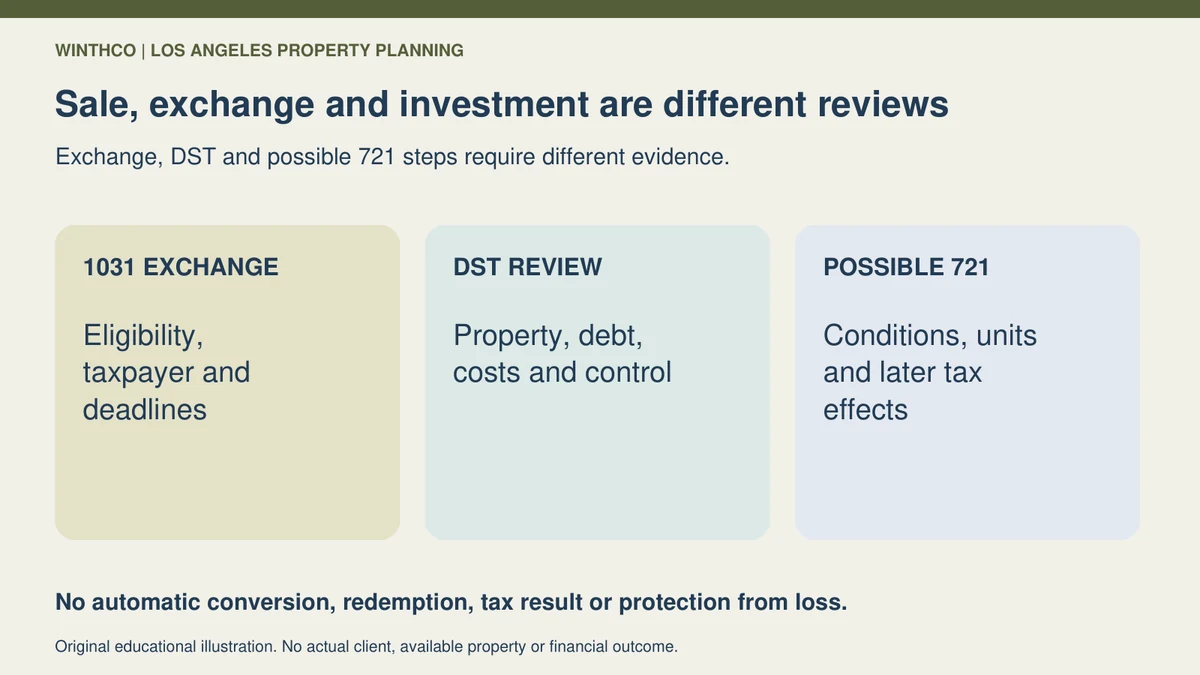
Section 1031 can defer eligible gain on an exchange of qualifying business or investment real property when the requirements are satisfied. It does not eliminate tax or make sale proceeds interchangeable with unrestricted household cash. Have the CPA explain how retained cash, liabilities and transaction costs could affect recognized gain, while counsel and the intermediary review the actual exchange arrangement.
The IRS generally requires written identification within 45 days after transfer of the relinquished property. Replacement property must be received by the earlier of 180 days or the applicable tax-return due date, including extensions. Coordinate these dates with the taxpayer's circumstances rather than assuming every seller automatically has the full 180 days. A city report application and a replacement-property identification are separate tasks.
Before committing, compare a taxable sale, direct replacement ownership and a qualifying DST interest using after-cost resources and practical obligations. A tax-deferral objective can be important without overriding liquidity, concentration or suitability. Allow time to decline a poorly supported replacement choice instead of treating an approaching deadline as evidence that the investment is appropriate.
Discuss your DST questions with Winthco →
Ask the advisor to define the service, compensation, conflicts and limits of the review. Request the private placement memorandum and supporting documents through authorized channels. The DST fundamentals overview can orient the discussion, but a summary cannot establish the quality of a particular property, sponsor or financing arrangement. Separate the proposed investment's documents from general educational material.
IRS Revenue Ruling 2004-86 analyzed a specified DST arrangement and allowed an exchange for its beneficial interests when the other Section 1031 requirements were met. It was not blanket approval of every trust or security using the DST label. Have counsel explain the actual structure and tax opinion, including trustee restrictions and any contingency provisions that could alter the arrangement.
Review the property assumptions rather than only the projected distribution. Ask about tenants, lease obligations, operating expenses, repairs, insurance, property taxes and reserve restrictions. Distinguish the sponsor, trustee, manager and any master tenant, including their authority and affiliate relationships. Ask what investors can actually direct and what information they receive when performance differs from the initial model.
Compare acquisition costs, ongoing charges and potential disposition expenses without assuming one headline percentage captures everything. For financed property, identify maturity, covenants and any early-repayment or collateral-release conditions. The DST prepayment-cost review separates a loan date from a projected exit. A favorable fixed rate or initial distribution does not promise favorable net proceeds when the property is eventually sold.
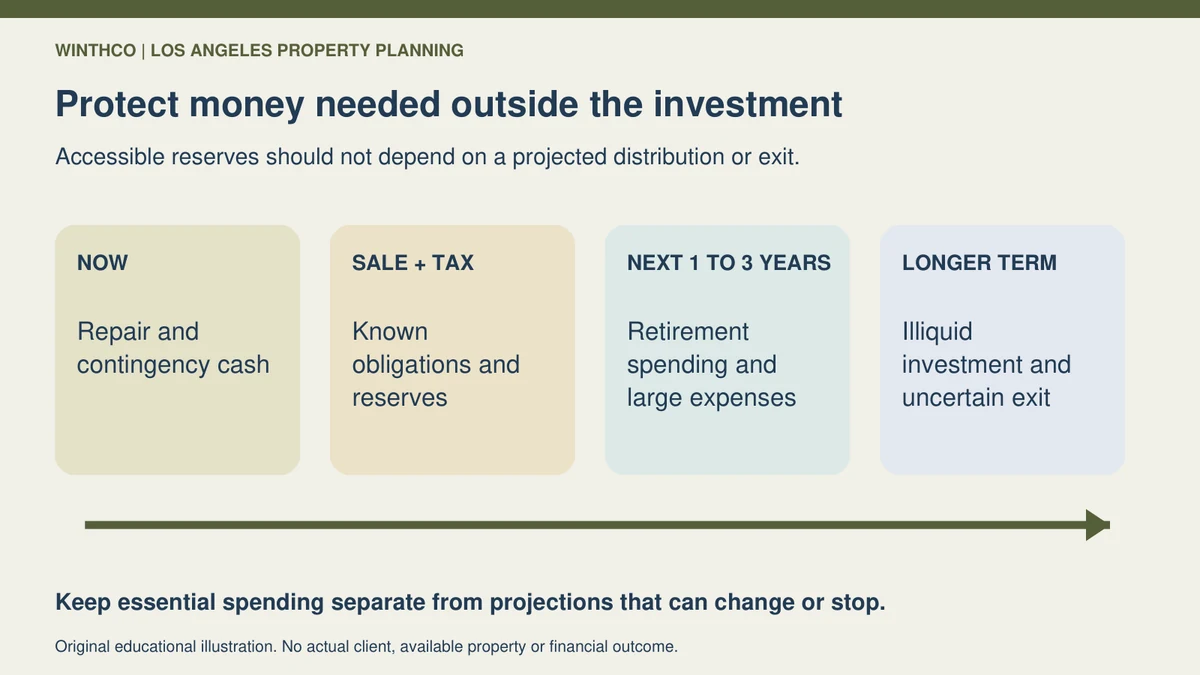
A potential contribution of property to an operating partnership for partnership interests is a separate transaction considered under Section 721, subject to exceptions and transaction facts. Do not confuse it with acquiring direct Section 1031 replacement real property. Ordinary REIT shares and operating-partnership units generally are not direct 1031 replacement real property, even when the partnership owns buildings.
If a proposed DST investment describes a possible later contribution, ask who controls the decision, how value would be established, which approvals remain and what happens if the event never occurs. Review fees, debt effects and conflicts separately. The DST versus 721 planning guide explains why the initial replacement review should not depend on an assumed future conversion.
Have the CPA and counsel examine the resulting units' reporting, transfer and redemption provisions. An anticipated liquidity program may have limits and is not the same as a current right to cash. FIFO wording does not guarantee tax-free withdrawals of basis. Compare the proposed continuing exposure with retirement goals rather than treating a change in legal form as automatic diversification or an assured exit.
WATCH & LEARN
Winthco Wealth Management introduces general DST educational resources. This is not Los Angeles sale-report guidance, an offering recommendation or a promise of income, liquidity or tax treatment. Original resource · Watch on YouTube ↗
Educational context only. The discussion does not establish the suitability, returns or tax treatment of an investment.
Consider a hypothetical rental owner whose sale file needs a jurisdiction check and whose household expects a large expense after closing. This is not a client case or an available offering. One replacement plan commits most accessible resources to an illiquid investment. Another retains separately reviewed liquidity but could produce a different tax result. Neither is automatically superior; the property's obligations, household resources and actual tax analysis would control.
Ask the team to compare distribution reductions, delayed sale timing, transaction costs and cash needed outside the exchange. Keep city-report questions separate from investment assumptions so completing one process does not imply the other is resolved. The useful result is a documented tradeoff, including reasons to decline a proposed allocation, rather than a predetermined investment amount or promised tax outcome.
DST ownership may reduce direct management responsibilities, but investors accept limited control, potentially prolonged illiquidity and property, tenant, sponsor, debt, fee, conflict, concentration and tax-law risks. Distributions can change or stop, and principal can be lost. DST private placements are generally offered to accredited investors through offering documents; eligibility is not a finding of suitability or protection from loss.
The SEC warns that private placements can involve limited disclosure, difficulty selling and total loss. FINRA emphasizes reviewing concentration and liquidity across holdings. Compare existing real estate and financial assets with the proposed investment, including shared market or financing exposures. The DST downside-scenario review tests overlapping assumptions rather than treating several investment names as proof that risks are independent.
Connect the property decision with 401(k)s, IRAs, retirement-income needs, accessible savings, asset allocation and beneficiary or estate coordination. Qualified retirement accounts are not themselves 1031 exchange proceeds. Winthco's wealth-management conversation can include tax-professional coordination without assuming an account transfer, rollover or advisory engagement is appropriate. Compare relevant choices, costs and services separately.
Use the prospect form to describe the planning question and current stage, not to send tax returns, loan statements or tenant records. Request an approved secure process if later review requires documents. Keep the advisor, CPA, attorney, broker and qualified intermediary roles explicit, with a named responsibility in the private planning file for each unresolved question before closing or committing to replacement property.
Geographic context, not a Winthco office or property-boundary determination.
| Decision | Evidence to request | What to avoid assuming |
|---|---|---|
| Sale file | Jurisdiction, parcels and report questions | A mailing city resolves every local requirement |
| 1031 arrangement | Taxpayer, proceeds and statutory deadlines | A later purchase always qualifies |
| DST review | Actual property, costs, debt and control | Reduced management removes financial risk |
| Possible 721 | Conditions, valuation and restricted units | A future conversion guarantees liquidity |
Do not rely on the label alone. The city's application instructions explicitly tell applicants to confirm City of Los Angeles jurisdiction.
LADBS describes it as Form 9 or RPR and identifies the residential seller process under the municipal code. Ask the city and your professionals how the requirements apply to the actual transaction.
No. It shows geographic context, not a Winthco office or an available property. The guide does not claim a Los Angeles office.
No. Sale-record requirements and replacement-investment diligence are different reviews. Complete both with the appropriate professionals.
Discuss taxpayer identity, potential recognized gain, reporting and coordination with counsel and the qualified intermediary. Do not assume the investment advisor also acts as your CPA.
Do not assume it will occur or provide immediate cash. Review the conditions and resulting restrictions, and plan accessible household resources independently.
Sources checked November 3, 2026. This article explains general concepts; your facts and the applicable documents control.
Winthco DST services · Winthco evaluation overview · Editorial standards
1031 replacement property
Compare DST and 721 UPREIT paths, tax rules, ownership, liquidity, control and risks before a property sale or exchange.
Read guide →Property sale planning
Prepare a rental sale with broker questions, 1031 timing, DST and separate 721 review, and retirement planning before committing proceeds.
Read guide →DST due diligence
Review DST downside scenarios, cash-flow assumptions and exit risks before investing. Learn what a stress test can reveal and what it cannot promise.
Read guide →Explore Winthco’s main DST article collection
Share your timeline and investment range. A Winthco team member will follow up with you.